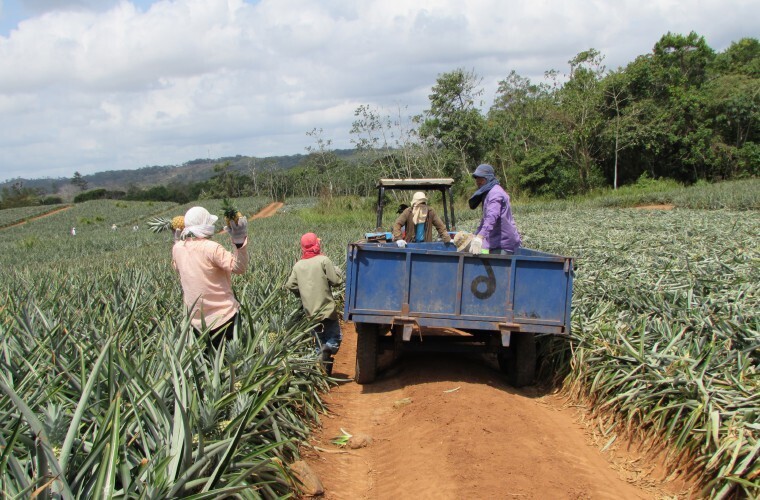
Pineapple producers from the district of La Chorrera, in the province of West Panama, have requested the Ministry of Agricultural Development (MIDA) to implement alternatives in organic pesticides, following the elimination of 20 pesticides classified by the entity as highly dangerous. Erlin Quintero, a member of the West Panama Pineapple Producers Association, explained that the ban on the importation, manufacture, sale, and use of these products generates concern not only in the pineapple sector but also among producers of strawberries, melons, and other agricultural crops. The resolution, published in the Official Gazette on January 20, 2026, prohibits eight pesticides, whose active ingredients include alachlor, benomyl, carbaryl, endosulfan, formaldehyde, imazalil, propachlor, and spirodiclofen. To this measure is added the ban, at the beginning of 2025, of 12 substances of extreme danger, including dichloropropene, aldicarb, cadusafos, coumafos, dichlorvos, ethion (H330), etoprofos, fenamifos, methiocarb, methomyl, tebufos, and triazophos, used as nematicides, bactericides, and insecticides. Quintero stated that although the sector applauds MIDA's decision for its focus on environmental protection and health, it is urgent to set up a working table with producers to evaluate alternatives for biological pest control, allowing to reduce the environmental impact without compromising productivity. In his opinion, the elimination of these inputs is adding a new challenge for national producers, especially in a context of high production costs and dependence on the international market. The La Chorrera Pineapple Producers Association currently has 2,000 hectares of cultivation. Only in 2025, the sector exported 750 containers, equivalent to more than 1,400,000 boxes of pineapple, which represented $16 million in contribution to Panama's Gross Domestic Product (GDP). Quintero added that pineapple production implies a cost of approximately $20,000 per hectare, which makes it essential to count on sustainable technical tools that guarantee the competitiveness of the sector.