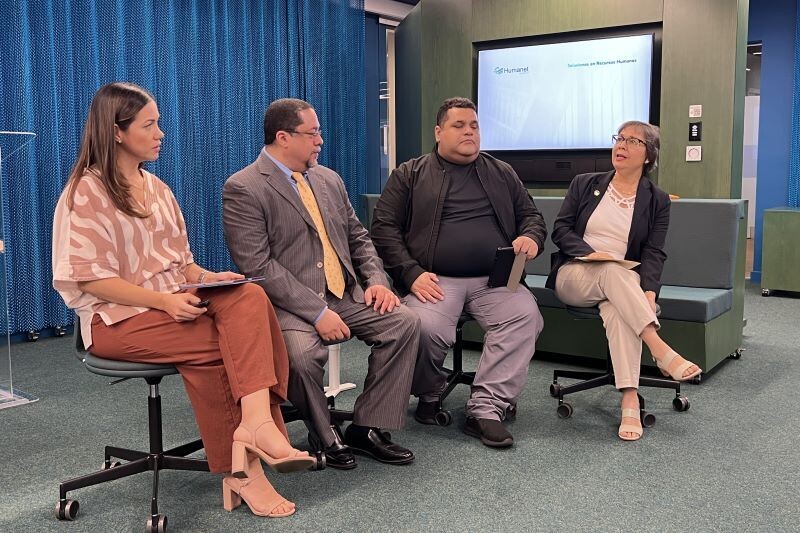
There is a general consensus among specialists that the digital divide has become a significant obstacle, hindering access to job opportunities for valuable segments of the population. Analysis and Factors of Inequality. The event began with words from Elizabeth Solís, director of projects at Sumarse, followed by Gissil Rojas, Managing Partner of Humanet Group, who introduced the relevance of the topic. The main objective is to give visibility to this hidden talent in the short term. The event “Beyond the Digital Divide: The Invisible Talent We Are Missing” was held by Humanet Group and Sumarse, an initiative that took place in the AES Innovation Salon to analyze the implications of this problem for talent acquisition in the country. Raisa Uribarri, researcher at the International Center for Political and Social Studies (CIEPS-AIP); Dr. Jayguer Dayan Vásquez Torres, coordinator of the Panamanian Observatory of ICT Indicators; and Ernesto Morales, technology entrepreneur and president of the Panamanian Organization of Technology and Communication Communities (OPACTIC). Among the main reflections shared by the specialists, the close link between the digital divide and the socioeconomic inequality of the Panamanian population was highlighted. Specialists reflected on the digital divide and socioeconomic inequality. Technology and sociology experts debated the consequences of the digital divide in the Panamanian labor market, highlighting that it affects both young people and older people with valuable skills. It was pointed out that this group not only includes young people, but also older people with relevant knowledge and skills who face barriers to effectively integrating into the contemporary labor field. Commitment from the Business Sector. Miguel Bolinaga, President of AES Panama, shared his company's position on the challenge. Bolinaga aligned with the panel's conclusions, stressing the importance of working responsibly to reduce this social inequality. The event concluded with a call to action to strengthen alliances between the private sector, the public sector, academia, and communities. The subsequent discussion brought together a panel of experts to examine the origins, the social factors that perpetuate this phenomenon, and possible strategies to mitigate its effects. The panel emphasized the need to promote public policies that expand connectivity and the importance of collaborating with communities and decision-makers to promote bills that shorten this gap. The Concept of “Invisible Talent”. The experts also highlighted the existence of what they called the “invisible talent”, consisting of people with high potential who strive to obtain training, but face severe limitations in terms of technological resources. The executive detailed AES's commitment to reducing the digital divide through its community programs, which are focused on bringing electricity to rural areas and, consequently, favoring connectivity.