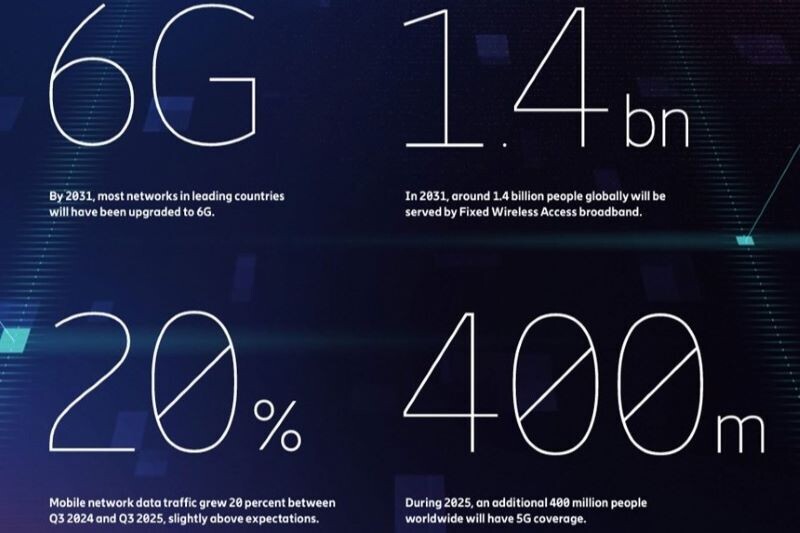
Latin America is on the threshold of a significant digital transformation, marked by the deployment of 5G networks and a massive increase in data demand. Technologies like Fixed Wireless Access (FWA) and the exponential growth in data consumption reflect the region's potential to lead the next wave of digital innovation. According to José Luis de la Vega, Vice President of Marketing and Communications for LATAM North and the Caribbean at Ericsson, 'the deployment of 5G in Latin America continues to represent a boost for local economies and the user experience through advanced connectivity.' The Ericsson report highlights that the penetration of 5G subscriptions in the region will grow by more than 50 percentage points by 2031. It is projected that mobile traffic in the region will nearly triple, increasing from 7.9 exabytes per month at the end of 2025 to 20 exabytes per month by 2031. This growth is intrinsically linked to the increase in connected users and the sophistication of network technologies. Countries like Brazil, Mexico, and Argentina are leading this digital demand. The increase in mobile traffic is due to the mass adoption of smartphones and the growing popularity of high-data-consumption digital services, including video streaming, cloud gaming, and augmented reality and Artificial Intelligence (AI) applications. The report underscores the transformative potential of technologies like Fixed Wireless Access (FWA), which emerges as a strategic solution to reduce the digital divide in rural and remote areas. This next generation of connectivity will offer advanced capabilities such as ISAC (fusion of telecommunications and sensors) and AI-native networks, improving services like eMBB and FWA, and enabling applications like digital twins and autonomous mobility. It is estimated that by 2031, 1.4 billion people globally will be covered by FWA networks, a large part of them in emerging markets like Latin America. Mobile subscriptions in the region will grow from the current 750 million to 820 million by 2031. In response to the growing corporate demand for ultra-reliable, low-latency connectivity, the report emphasizes the need to adopt advanced technologies like Carrier Aggregation (CA) and Massive MIMO to optimize spectrum use and ensure efficient performance. This also generates a notable increase in mobile uplink traffic, driven by devices such as AR/AI glasses and autonomous vehicles.