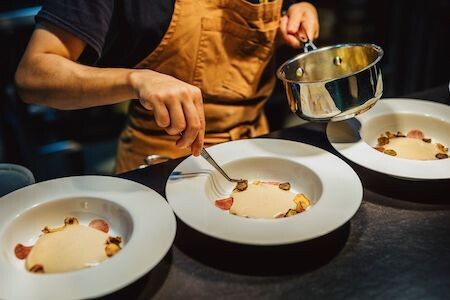
Establishments such as Maito and Cantina del Tigre feature in Latin America’s 50 Best Restaurants, while La Tapa del Coco, UMI, Fonda Lo Que Hay, and Caleta appear on the extended list, reflecting diverse proposals of local cuisine. To this scenario is added the arrival of Fine Dining Table in Central America, an international platform that chose Panama as the venue for a gala scheduled for March 2026, as part of its regional expansion. Beyond the capital, culinary experiences stand out in other regions of the country, such as Bocas del Toro, with community tourism initiatives linked to cocoa, and areas like Boquete and Tierras Altas, associated with Geisha coffee and farm-to-table experiences. It also highlights air connectivity, accessibility, and the development of the culinary scene in the capital. The Magazine also mentions that Panama City holds UNESCO recognition as a Creative Gastronomic City, which has contributed to giving greater international visibility to its culinary offering. In this context, the Administrator General of the Panama Tourism Authority, Gloria De León, stated that the country's cuisine is deeply linked to its traditions and the flavors that have traversed the isthmus for over a century, becoming an expression of its cultural diversity. The article also refers to the positioning of Panamanian restaurants in international rankings. Panama was highlighted by Forbes magazine as one of the gastronomic destinations to watch in 2026, in a recognition that focuses on the diversity of its cuisine and the growth of its culinary offering. The publication highlights that Panamanian cuisine is the result of a mixture of indigenous, Afro-Antillean, Spanish, Asian, Middle Eastern, and Caribbean influences, a reflection of the country's history as a cultural meeting point.