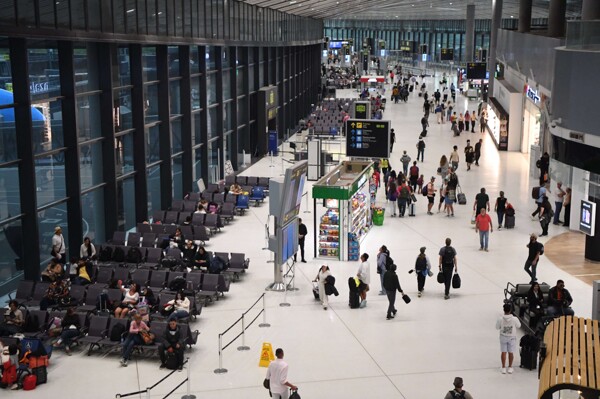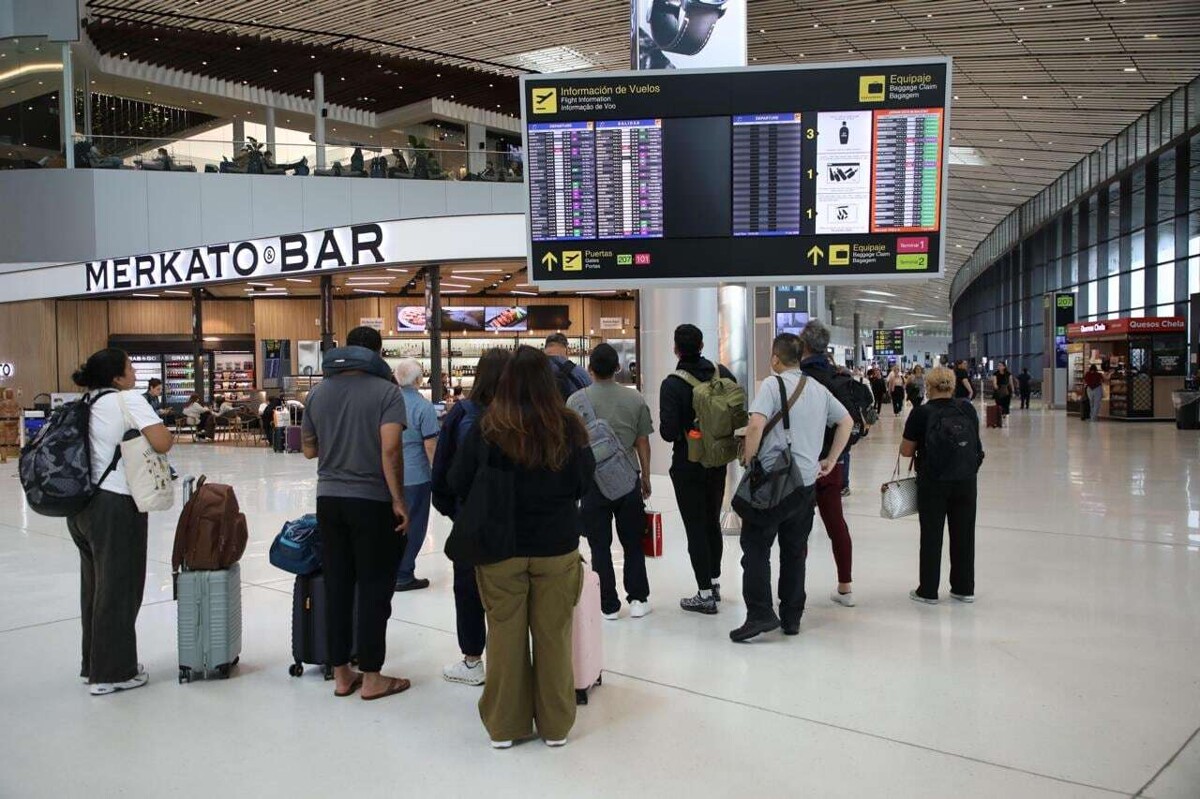
Aviation and business guilds have warned that charging passengers in transit could affect the country's air connectivity compared to other regional centers. For reference, at Jorge Chávez Airport in Lima, the so-called Unified Airport Use Fee (TUA) of $11.86 is applied, but only to passengers making connections between international flights without leaving the airport. According to the International Air Transport Association (IATA), due to this fee, at least 11 international routes were canceled from Lima, and part of the air traffic migrated to other regional hubs, reducing the airport's competitiveness as a connection center. A new debate has reopened in the country after the deputy, Benicio Robinson González (Democratic Revolutionary Party), from Bocas del Toro, once again pushed the bill proposal that would charge a $10 fee for travelers in transit through Tocumen International Airport and other country's air terminals. This initiative is this week on the discussion list of the National Assembly, specifically in the Economy and Finance Committee. The proposal aims to create the so-called Transit Airport Facilities Use Fee, with the supposed objective of capturing part of the high flow of international passengers who use Panama as a hub without entering the country. However, the opposition warns that the introduction of an additional fee alters the structure of air transit costs, reducing Tocumen's competitiveness against other regional connection centers. Of the total of more than 20.9 million passengers who passed through Tocumen International Airport in 2025, about 15.2 million were in transit, adding up to more than 7.63 million in transfer disembarkation and 7.60 million in transfer boarding. The deputy proposed last year that if the fee is approved, the country could raise up to $190 million a year. Of that total, 30% would be destined for the maintenance and modernization of the national airport network, while 70% would go to strengthening public hospitals such as Santo Tomás, the Hospital del Niño and the National Oncology Institute. But what he has not warned in his analysis is that the increase in the fee could lead to route adjustments by airlines, which would prioritize airports with lower tariff burdens, as well as a possible increase in ticket prices for the final passenger, with a direct impact on demand and connection volume. During the incidents period of this Monday, March 23, in the National Assembly, Robinson defended the creation of a fee for transit passengers as a mechanism for social contribution. "It is not an increase, it is a fee so that it can be given to the Oncology Institute, to the Hospital del Niño, to Santo Tomás (...) so that our people can have a better quality of life," he stated. "We will be in the discussion (...) so that a fee is given to transit passengers and is destined for our people," he expressed. The bill, identified as No. 131, establishes a fixed fee of $10 per transit passenger, which would be collected by airlines at the time of ticket purchase and incorporated into the cost of the fare. Alert about loss of competitiveness. The proposal revives a debate that has already generated resistance in the past. In this context, he pointed out, the imposition of an additional charge could reduce competitiveness against other regional hubs such as Bogotá, Lima, and San Salvador, encouraging the reconfiguration of routes to destinations with lower operational costs. An effect that could be replicated in Panama, which is a natural hub for connections. In turn, the Panamanian Association of Hotels (APATEL) expressed its rejection of the proposal by warning about its possible adverse effects on air competitiveness and the performance of the tourism sector. In an official statement, the hotel guild manifested its "deep concern" about the initiative, called "Transit Airport Facilities Use Fee" (TUIAT), considering that it would set a negative precedent by using a strategic sector as a source of collection for purposes alien to its sustainability. While the organization recognized the importance of strengthening the national health system, it emphasized that measures of this type could weaken the connectivity model that has positioned Panama as a key regional air link. APATEL warned that more than 60% of passengers transiting through Tocumen are in transit, which makes cost a determining factor for airlines.