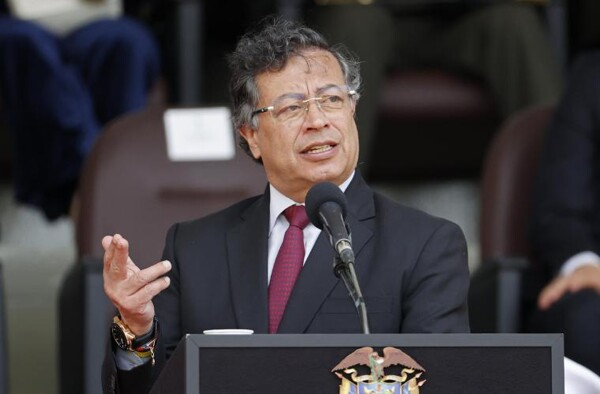
Cuban Ambassador Víctor Manuel Cairo speaks.
Panama City, Oct 27 (Prensa Latina) – The Cuban ambassador to Panama, Víctor Cairo, stated today that despite pressures to alter the historical stance of nations, the United States will suffer a moral defeat in the vote at the UN on the blockade.
At an act of solidarity with the largest of the Antilles, held at the diplomatic headquarters two days before the vote in the United Nations General Assembly on the resolution "Need to end the economic, commercial and financial blockade imposed by the United States against Cuba," Cairo denounced that an unusual campaign has been deployed on social media and pressures have been applied for countries in the region to change their historical stance of demanding an end to the hostile policy.
"They threaten with some brutal, cruel, deceitful measures, but we are very sure that the United States will suffer another moral defeat in its endeavor," he said, referring to the 32 previous occasions when the international community has rejected the siege imposed more than six decades ago.
"They try to impose a matrix of opinion that the blockade does not exist, it is fictitious, that the complex economic situation Cuba is going through is the result of shortcomings and incapacities of its Government, people, and Revolution," he commented.
Faced with the new pressures, Cairo highlighted that there are peoples from Latin America and the Caribbean, Africa, and Europe who have expressed that they will not change their vote against the blockade, while lamenting how sad it would be for the history of nations and their Executives that, under Washington's pressure, they come to betray their voting pattern.
"Under any circumstances, he added, even in the midst of the damage that such a stance may bring to bilateral relations and the connection between brotherly peoples, Cuba will continue to fight and defend its cause as it has done for more than 60 years."
In another part of his speech, the ambassador condemned that the United States maintains his country, unilaterally and arbitrarily, on a spurious list of countries that supposedly sponsor terrorism, when in reality Cuba has been a victim of that scourge. This measure is another one that harms the economy, such as the cancellation of commercial operations, cooperation actions, and investment projects that were at different stages of implementation. He questioned the extraterritorial nature of the blockade, which affects third countries like Panama, especially in the banking and financial sector and in companies installed on the isthmus. For Cairo, in this new challenge, Cuba feels it is not alone and counts on the solidarity of brotherly peoples, at a time when the Homeland calls and convenes.
During the evening, several participants, including the former ambassador of Panama to Cuba, Reynaldo Rivera; Gabriela Rosas, from the solidarity coordinator; Dalys Batista, on behalf of Panamanian women; and lawyer Gilma Camargo, from the Network of Intellectuals in Defense of Humanity, urged to wage a new battle on social networks and other fronts. They also highlighted the example of Cuba and reaffirmed their commitment to its just cause until the "criminal blockade" is ended.