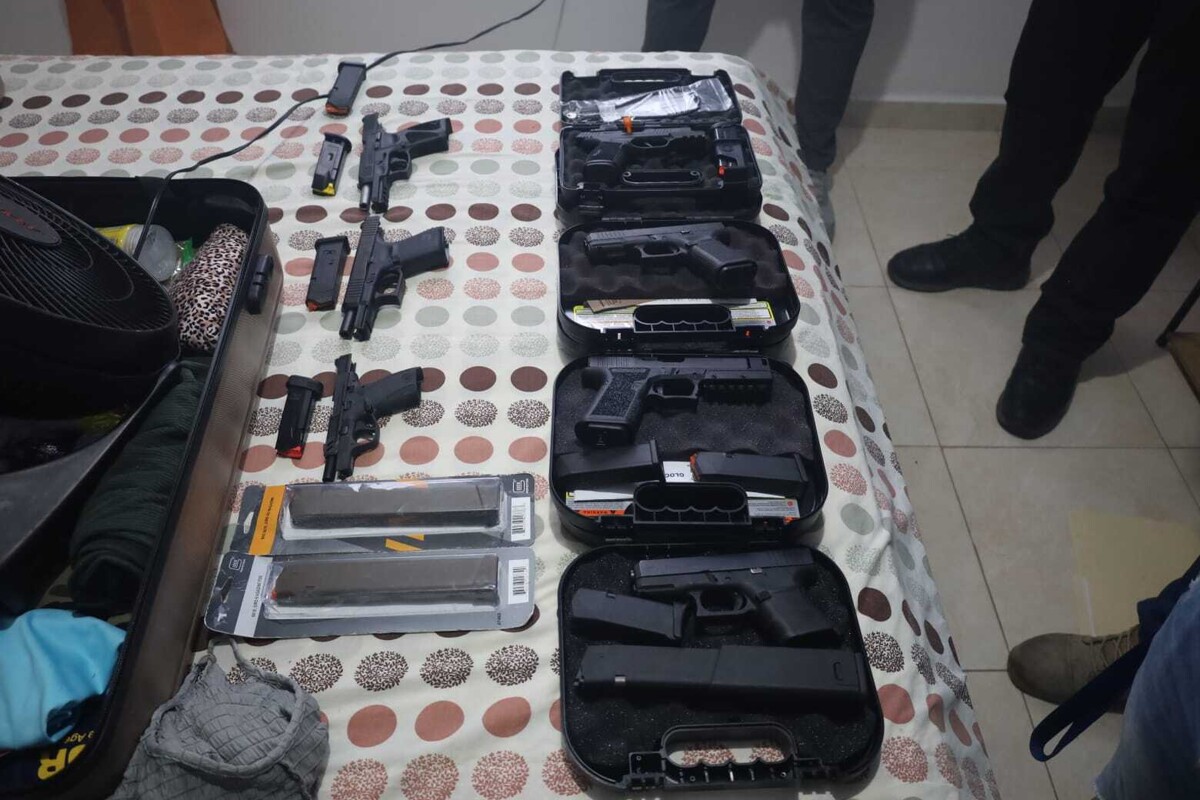
The recent seizure of firearms in the 24 de Diciembre district, far from closing the chapter on illegal arms trafficking in Panama, has opened a much deeper and more concerning debate. According to legal experts, the discovery is not an exception nor a definitive victory, but a clear sign that the country faces a clandestine arms market operating with ease, creativity, and little fear of consequences. «The problem is not that weapons are found from time to time; the problem is that they appear by chance,» warned lawyer David Villarreal, questioning the state's real capacity to control the entry, circulation, and final destination of illegal weapons. Villarreal was direct: isolated findings of arsenals in homes, vacant lots, or improvised hiding places do not reflect efficiency, but structural weakness. «This means the state has no control over the weapons entering the country. Some are found, but no one can say how many are not found,» he maintained. In his opinion, the volume of weapons seized in police operations, added to those handed in through official exchange programs, demonstrates that there is a huge amount of weapons in the hands of private individuals and criminal structures. «The feeling is that in Panama, getting a weapon is alarmingly easy. Moreover, someone gets out of jail today and has a weapon tomorrow,» he stated. Although he acknowledged that sentences for illegal possession and trafficking have increased in recent years, Villarreal warned that the procedural system ends up diluting the deterrent effect. «I have known convictions for these crimes, but the Criminal Procedural Code allows for plea agreements and many end up being reduced to five years of community service,» he explained. In practice, this sends a dangerous message, according to the jurist: trafficking in weapons can be cheap. One of the most alarming points is the change in trafficking routes and methods. «Now, parts and components are bought on international commercial platforms and assembled right here,» Villarreal assured. It is there, he said, that the battle is being lost. «Investment is needed in this pursuit at the same level as it is done with drug trafficking, because the damage is equally serious,» he stated. According to Brawerman, illegal weapons do not have a single point of entry. They can enter by air, land, or sea, taking advantage of routes well known by criminal organizations with international reach. For this reason, he stressed the importance of cooperation with allied countries to dismantle complete networks and not just capture isolated links. Both jurists agree that gangs and criminal structures maintain armories of weapons, used to protect territories, guard drugs, and confront rivals. Article 335 of the Penal Code establishes up to 15 years in prison for simple illegal trafficking in weapons and up to 22.5 years in its aggravated form. «The problem is not the penalty, but detecting the crime. It cannot be quantified how many lives and assets were saved by frustrating that crime,» he pointed out. However, he acknowledged that the real challenge is to detect these operations before they consolidate, a task that requires more resources and state priority. Brawerman recalled that Panamanian legislation does contemplate severe penalties. «It was not a failure, it was a frustrated crime,» Brawerman responds From the other legal shore, lawyer Isaac Brawerman considers that the focus should not be on whether the State failed, but on the fact that illegal weapons were prevented from reaching criminal organizations. «It was an important achievement of the security mechanisms. Not everyone can do that, it requires knowledge and skill,» he indicated. Another critical point is the lack of traceability. Villarreal questioned that many of the seized weapons are not properly tracked, which prevents knowing where they come from or if they have been used in pending homicides. «Seizures today are greater than in previous years, but if the correct traceability is not done, smuggling will remain intact,» he warned.