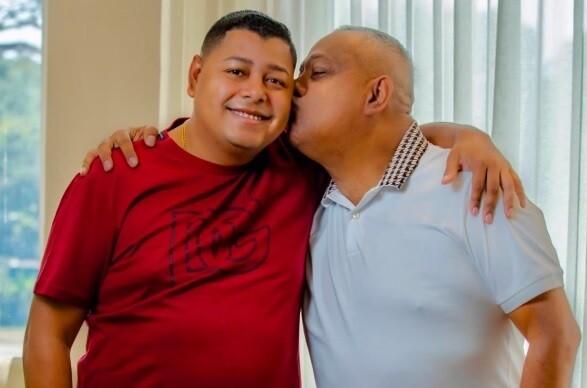
18 months after the investigation began, Abraham 'Rico' Pineda, son of deputy Raúl Pineda, had his pretrial detention measure replaced with house arrest. Now, instead of remaining in pretrial detention, he will serve his arrest at home. The decision ends months of uncertainty and marks a significant turn in the case. Relatives and acquaintances received the resolution with relief, which confirms that for now there is no evidence linking him to the investigated crimes. 'Rico' Pineda was captured on August 20, 2024, by agents of the National Police in front of the offices of the Accusatory Penal System in Plaza Ágora, in the capital. On that same day, his arrest was legalized by a judge, who imposed pretrial detention and charged him with money laundering and drug-related crimes within the so-called Operation Jericho. The operation was the result of an investigation by the Drug Prosecutor's Office, which sought to dismantle a criminal network allegedly dedicated to the international trafficking of narcotics and money laundering. Operation Jericho is a case file that began on June 30, 2023, and accumulated investigations, wiretaps, and raids in several provinces of the country, pointing to a structure that, according to the Public Ministry, moved drugs and illicit capital. In this context, the Prosecutor's Office charged Rico Pineda, alleging that he had used 'Servicios Múltiples Rama' companies to launder funds presumably from drug trafficking, based on telephone transcripts and financial analyses. From his capture in August 2024 and in the following months, Rico Pineda was detained at the El Renacer penitentiary center serving pretrial detention while the criminal investigation progressed, amid requests from the defense to change his precautionary measure to a less restrictive one. That situation remained until, after nearly 17 months of the process, the Court of Appeals finally decided to modify the measure to house arrest, after the Prosecutor's Office failed to prove the charges against him.