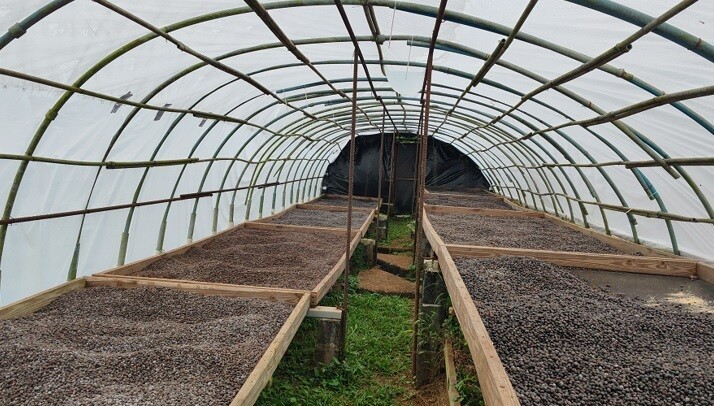
Coffee producer associations in Panama will exchange clones of this variety with their counterparts in Central America, as part of an agreement aimed at improving grain quality and opening new sales markets.
This agreement, explained José Villarreal, acting general director of the Institute of Agricultural Innovation (IDIAP), was reached during the fourth annual meeting of the Regional Cooperative Program for the Technological Development and Modernization of Coffee Growing (PROMECAFE).
In the district of Capira, in the province of West Panama, as well as in Veraguas, Coclé, and Los Santos, the cultivation of robusta coffee is part of the family economy and represents an important source of employment.
Through this exchange of robusta coffee clones, the goal is to identify which varieties best adapt to the cultivation zones of different countries and introduce their cultivation in nations like Costa Rica, where traditionally only arabica coffee plantations exist.
In Costa Rica, Villarreal noted, the planting of robusta coffee was authorized starting in 2018, after having been banned since 1988.
The exchanges of robusta coffee clones will be carried out through PROMECAFE, while trials with the varieties that enter Panama must be supervised by the IDIAP.
«These trials will be developed in different environments in the country and, generally, take between five and seven years,» the official specified.
The ultimate goal is for producers to organize into cooperatives, achieve higher quality coffee production, and be able to open export markets for Panamanian robusta coffee.