Panama's Monthly Index of Economic Activity (IMAE) grew by 4.77% year-on-year as of last October, accumulating an expansion of 4.36% in the first ten months of 2025, driven by sectors such as transportation, finance, and construction, according to data from the National Institute of Statistics and Census (INEC) released this Monday.
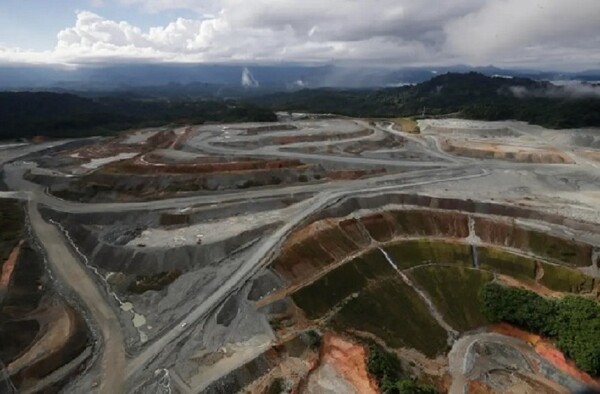
Panama's Gross Domestic Product (GDP) grew by 2.7% in 2024, driven by commerce and domestic consumption, although marked by the drag from the abrupt closure of a large copper mine that has slowed its pace of expansion.
In explaining the year-on-year result of the IMAE, which is a production indicator that allows for an approximation of the country's economic growth path, the statistical entity points out that the transportation, storage, and communications sector was mainly driven by the Panama Canal, although air transport and container movement through the national port system also contributed.
On the other hand, negative variations were shown in the commercial activity of the Colón Free Zone, due to the lower value of goods re-exports; the industrial production of tomato derivatives, milk in its various presentations, and carbonated drinks; the cultivation of banana and watermelon intended for export, among others.
The Panamanian government maintains the expectation of 4% economic growth for this year.
The GDP expanded by 4.4% in the first half of 2025, compared to the same period in 2024, driven by the interoceanic canal, according to statistics from the Panamanian Comptroller General's Office.
Industry was boosted by the processing of some essential food products such as pork and poultry meat; and by the production of alcoholic beverages such as beer and other liquors, indicated the INEC.
According to the INEC, construction showed a "significant increase" sustained by buildings, additions, and repairs, measured through the permits granted by the municipalities, which in turn generated a greater demand for inputs that favored the activity of mining and quarry exploitation.
Commercial activity registered moderate positive rates; financial intermediation continued its growth path due to the increase in deposits and credits at the local level; and the hotels and restaurants services sector maintained a favorable performance due to the entry of tourists into the country in October, both by air and on cruises, a situation that also benefited restaurants.
The year-on-year expansion in October of 4.77% "is lower than the 8.36% reported in the same month of the previous year," specifies the INEC, an entity of the Panamanian Comptroller General's Office.