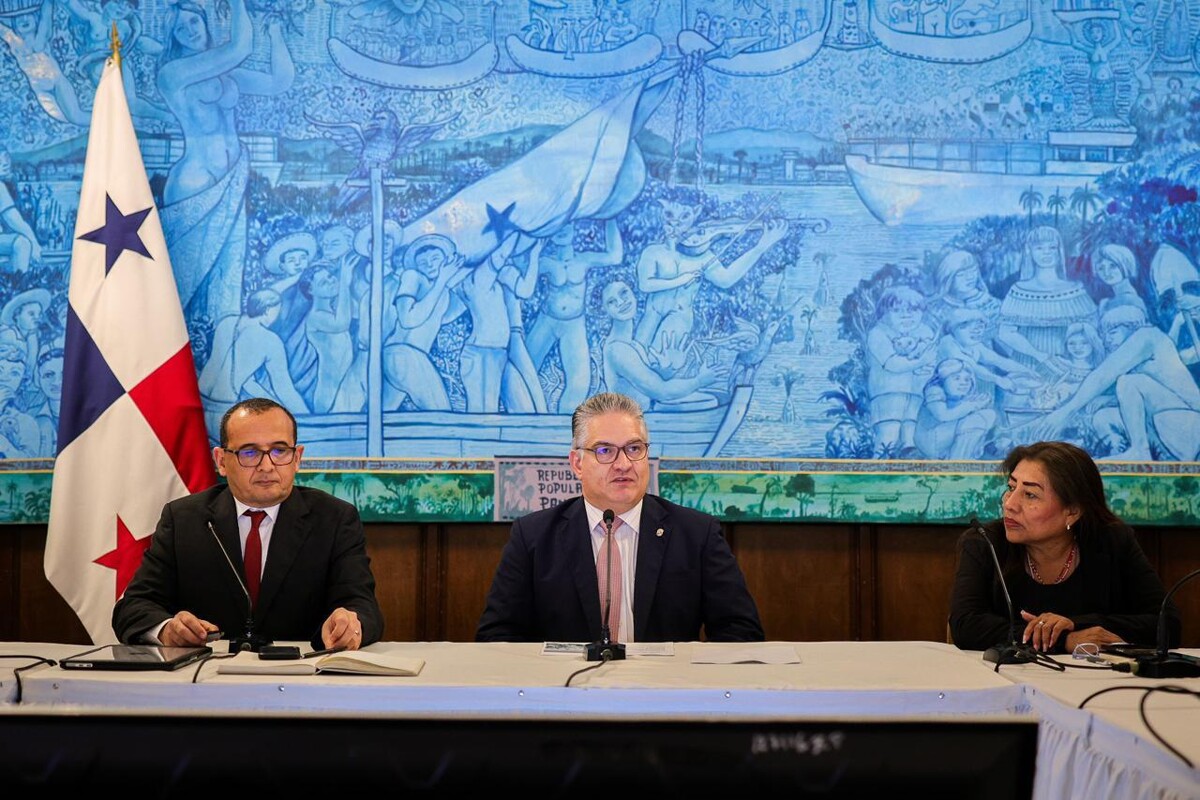
Panama and Colombian authorities are preparing for a historic step in electrical interconnection. This Monday, ministers and deputy ministers met with energy sector representatives in the second inter-institutional session, aiming to map out the roadmap for the Panama-Colombia project. The meeting, chaired by the Minister of the Presidency, Juan Carlos Orillac, was held in the Peace Hall of the Palace of the Herons and evaluated the progress in consultations with communities along the power line route. Several indigenous populations have shown willingness to accept the project, provided it incorporates social components such as roads, rural electrification, and support for schools and productive activities. 'There are social issues here that we must address to avoid setbacks for the project,' Orillac stated, recalling that this is a priority project for President José Raúl Mulino. The mega-project is led by Interconexión Eléctrica Colombia Panamá S.A. (ICP), an alliance between Panama's Empresa de Transmisión Eléctrica S.A. (ETESA) and Colombia's Grupo ISA. The electrical interconnection is part of the Sustainable Environmental Corridor, along with plans for road infrastructure and rural electrification, aiming to strengthen energy security and resilience, foster regional electricity exchange, and generate development in the involved communities. The line will have three sections: a 220 km section between Panama City and Mulatupu (Kuna Yala), a marine section to Necoclí (Colombia), and a land section to Montelíbano, with a capacity of 400 megawatts. The Darién and Kuna Yala communities have requested that the project include a road connecting the Pan-American Highway to Mulatupu, electrification of 730 homes, and improvements in education, health, food security, and productive activities. Upcoming consultations are anticipated in the Wargandí Congress, Alto Bayano, and the Guna Yala Extraordinary Congress between this year and March 2026. Additionally, this month is expected to see the completion of the Environmental Impact Study corrections, while early next year the financing scheme and rural electrification regulations will be defined. Among the participants were the Ministers Lucy Molinar (Education), José Luis Andrade (Public Works), Jaime Jované (Housing and Territorial Planning), the Deputy Minister Doris Bill Fábrega (Indigenous Affairs), the Secretary of Energy, Rodrigo Rodríguez, and the Administrator of ASEP, Zelmar Rodríguez.