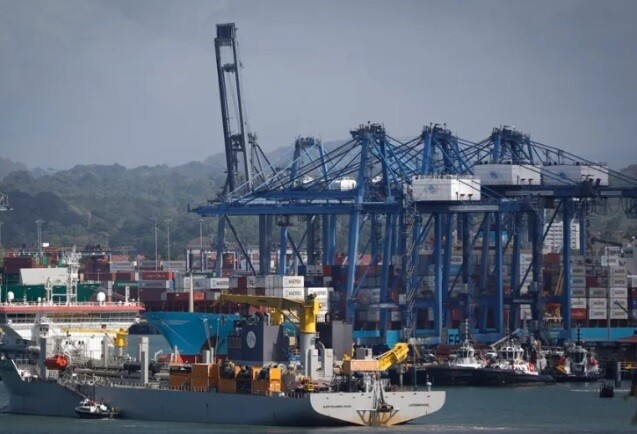
China halts port sale in Panama, complicating matters for BlackRock. Sources have stated that "the agreement is now at an irresolvable deadlock." The White House has deemed Chinese control over the Panamanian Canal ports "unacceptable," warning that it could pose a risk to U.S. national and economic security. A high-ranking Chinese official indicated that Beijing seeks the port participation to be part of trade war negotiations with Washington. The initial deal, announced in March, involved the sale of over 40 ports operated by CK Hutchison worldwide, including those in Panama, for approximately $23 billion. The operation was announced after Donald Trump criticized China's growing influence over the canal and threatened to take control of the infrastructure, through which over 40% of container traffic between the U.S. passes. While Trump called it a "recovery" of U.S. control over the canal, the official Chinese press compared the deal to "handing a knife to the enemy." Analysts point out that Beijing has influence over the involved companies, as both BlackRock and CK Hutchison have business in China, and MSC is one of the main carriers of Chinese exports in the world. Mid-year, Cosco demanded veto power over decisions contrary to its interests to secure Beijing's approval to join the consortium. The case has become a critical point in the turbulent ties between China and the U.S. You may be interested: "Chenchen fell!" Mulino receives $2.965 billion from the Canal. The sale of the Panamanian ports of Balboa and Cristóbal, operated by Hong Kong's CK Hutchison, has stalled due to Beijing's demands, which want the state-owned Cosco to have a majority stake in the consortium led by BlackRock and Swiss MSC, reported the Wall Street Journal on Wednesday. According to sources cited by the publication, Beijing first protested the deal, then demanded equal participation, and now threatens to block the agreement if Cosco does not get a larger share than its partners. For now, the future of the deal remains in the air, with a blockade that could change the dynamics of international trade in the region.