The president of the Chamber of Commerce, Industry, and Agriculture of Panama (CCIAP), Juan Arias, stated that this scenario opens a key opportunity to reactivate the economy and strengthen the stability of Panamanian families.
This is not just another statistic; it is a reflection of the social pressure felt in every household in the country. For the CCIAP, the national priority is indisputable: Panama needs to reactivate its economic engine and generate formal employment, because without work, there is no peace or stability for Panamanian families.
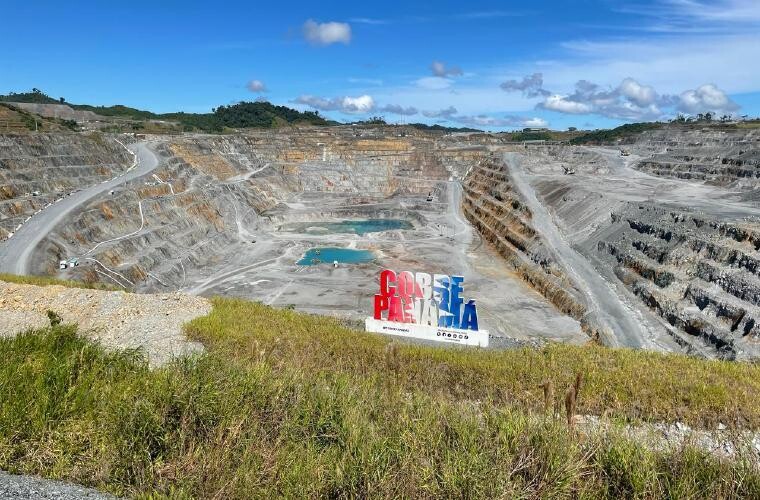
One of the most forceful points raised by Arias is the need to reactivate the copper mine.
Panama today faces one of the most significant challenges on its national agenda: generating employment for more than a million people who are seeking a job opportunity.
That money, which previously circulated in the national economy, is now a void that is felt in commerce and in the generation of direct and indirect jobs.
Despite the current outlook, the projections are not entirely bleak. Projects such as the mine and water management in Río Indio are emerging as key pieces to get the economic machinery running at full speed again.
On the street, the message from citizens is direct.
It is estimated that the Panamanian economy will grow by 4% this year, with a trend of between 4% and 5% for the coming years.
With the new year just around the corner, Panama enters a stage of decision-making. Each day the country goes by without concrete decisions is a day taken away from the million Panamanians who are waiting for a response.
The question that hangs in the air is mandatory: Will we continue to wait for solutions to arrive on their own, or will we make the necessary decisions for Panama to get back to work?
It is not about political speeches or long-term promises; it is about the ability to pay for food, electricity, and the children's education.
"The mine can be a catalyst not only for employment but also for circulating money," Arias affirmed.
Beyond the ideological debate, the business leader highlights the real impact on the country's pocketbook: the mine represented annual purchases of between $800 million and $1 billion from local suppliers and companies.