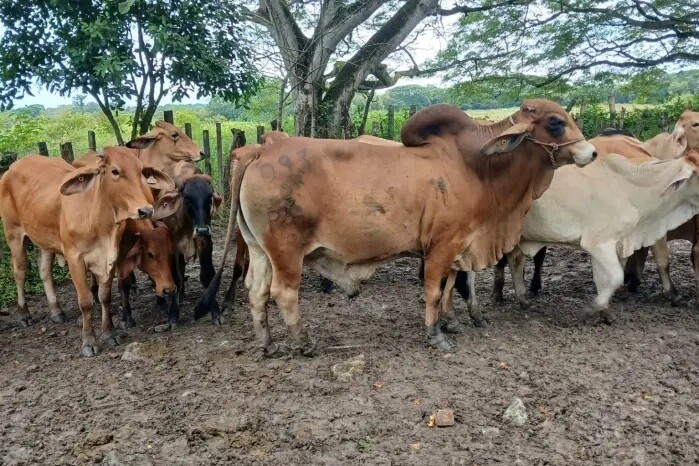
Panama's Genetic Improvement Program for Livestock
Panama's Ministry of Agricultural Development (MIDA) has launched a program aimed at increasing herd productivity. Its objective is to unify national criteria for organizing and systematizing genetic improvement actions, considering national perspectives and the production potential of each specific area.
The program also addresses the needs of small livestock farmers who, due to economic problems and a lack of guidance in targeted crossbreeding, do not have access to high-genetic-value breeding stock and do not adopt cutting-edge technologies such as artificial insemination and embryo transfer.
"A Better Breeding Bull"
According to the report, unlike previous administrations, MIDA, under the leadership of Minister Roberto Linares, has prioritized technical support and reproductive monitoring of beneficiary farms.
Under the "A Better Breeding Bull" program, the ministry delivered 116 high-quality genetic breeding bulls to national producers, representing a total investment of $319,000. The breakdown includes:
50 Zebu breeds; 25 Beefmaster breed; 21 Angus and Brangus breeds; 20 dairy breeds.
All animals are capable of adapting to the diverse climatic conditions of Panama's productive regions.
"These figures guarantee that the introduced genetic material is effectively fulfilling its multiplying function," highlights the technical report from the National Directorate of Livestock, led by Dr. Sara Feliú. The directorate's mission is to promote and strengthen animal production with projects and programs aimed at improving the productivity and competitiveness of small and medium-sized producers through eco-friendly technologies.
Results and Future Plans
During the reporting period (November 1, 2024, to October 31, 2025), 9,072 births were reported from 813 bulls delivered in previous years (2021-2024), averaging 11 offspring per bull.
The report also specifies that six months after the deliveries, 58% of the participating farms were evaluated. Of the 965 females assessed, a 53% pregnancy rate was achieved, equivalent to 512 cows.
The objective of the "A Better Stud" program is to contribute to the genetic improvement of small farmers' herds by replacing existing bulls with those of better genetic quality: Zebu beef, dairy, and European beef.
Finally, the National Director of Livestock reported that by 2026, MIDA will launch new projects focused on improving production systems for small livestock and strengthening the integrated management of livestock. Feliú indicated that these initiatives include strengthening technical capacity through continuous knowledge updates and ongoing training of technicians as part of the process to strengthen agricultural extension at the national level.