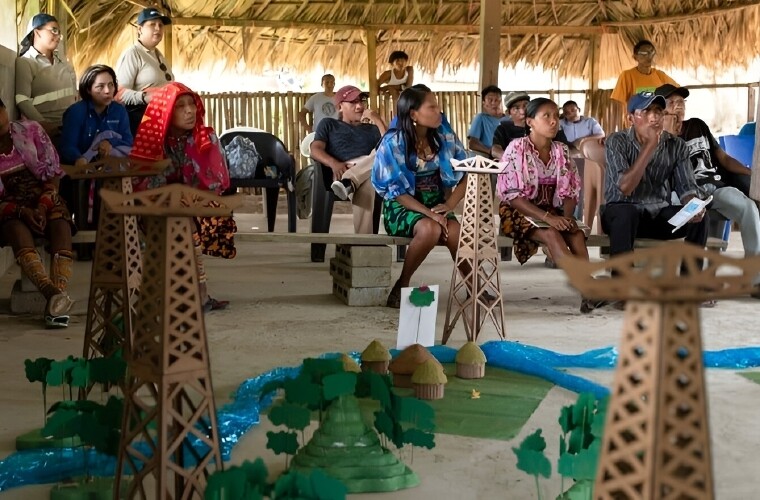
The Rural Electrification Office (OER) views the electrical interconnection between Panama and Colombia as an opportunity to continue reducing access gaps in remote areas; therefore, it will play a key role in the execution of the project, which is scheduled to begin its construction phase in the second half of the year. Engineer Antonio Clement, OER's general director, mentioned that the country has sufficient energy capacity to meet local and international demand; however, he acknowledged that it is necessary for all communities to have electricity before starting the work to avoid speculation among the population. The institution, in this sense, has participated in the coordination meetings carried out by the Executive with the indigenous peoples to learn about their needs and address them as quickly as possible, prioritizing areas of greater vulnerability and high traffic such as schools, health centers, and comarca houses. Clement clarified that these works will not be developed depending on the permit for the interconnection with Colombia, as they were already planned before the Government decided to continue with the project; therefore, they have only expedited their plans. "With or without interconnection, we will maintain our course of helping the most vulnerable areas of the country," he stated to Panamá América. He explained that the OER's role in the project will be to guarantee the service in the areas through which the connection will pass by installing power lines, solar, and photovoltaic systems, for which the support of other institutions such as the Ministry of Public Works will be needed in the construction of roads to facilitate the entry of materials into the area. The official reiterated that his priority will be the areas with the highest concentration of people until achieving 100% electricity coverage. "Our office will fulfill what corresponds to it, which is to bring light to the most precarious communities," he said. Although initially the indigenous peoples rejected the project, after several meetings with Executive representatives, they have changed their minds; however, they request the construction of a road connecting the Pan-American Highway with Mulatupu, the relocation of the Asnati School, and the electrification of 370 homes in the communities of Nurra, Mortí, Ualá, and Sassardi-Mulatupu. Authorities indicated that in the coming weeks, they will meet with representatives of Alto Bayano to continue designing the work route that will facilitate the development of the project, which is estimated to cost 800 million dollars. They detailed that the closing of this consultation process will be during the month of March at the Extraordinary Congress of Guna Yala; meanwhile, the process of remuneration for affected persons will be discussed. The electrical connection with the South American country is composed of three sections: the first 220 kilometers long between Panama City and Mulatupu (Guna Yala), a maritime section to Necoclí (Colombia), and a land part to Montelíbano.