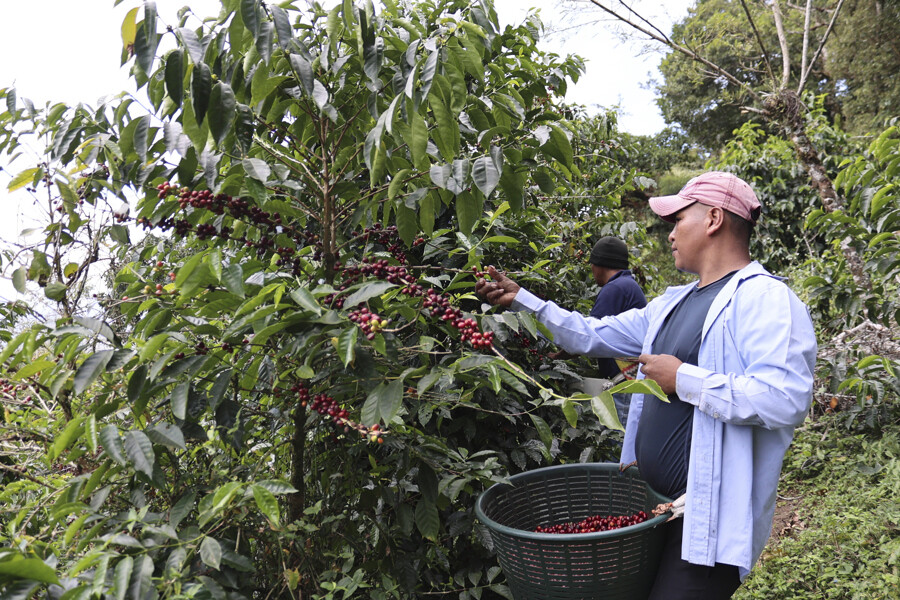
In the mountains of western Panama, where one of the world's most expensive coffees is born, the coffee harvest depends mostly on the hands of the indigenous Ngäbe Buglé people, one of Panama's seven indigenous groups. This work takes place amid growing concern in the sector. Ricardo Koyner, president of the Specialty Coffee Association of Panama (SCAP), and Quintín Pitti, mayor of the Renacimiento district, agree that Panama faces a labor shortage for coffee harvesting. Pitti told EFE that about 10,000 people migrate to the Renacimiento district each year to harvest coffee, and many cross the border into Costa Rica, jeopardizing the harvest that begins in September in lower-altitude areas. One of the faces of this story is Moisés Montezuma, considered one of Panama's best roasters and the only national coffee judge of Ngäbe Buglé origin. His journey began as a picker in the 1970s on coffee farms where he learned to recognize the bean from its source. He was one of the key workers in that first lot that changed world coffee cultivation when Geisha was first brought to an international tasting table. 'Little by little, I became a taster without realizing it,' Montezuma told EFE, assuring he was first a pre-judge and in 2006 became a national judge of Panama as part of the country's team of specialty coffee specialists. Today, he can distinguish between coffee varieties just by tasting the bean's honey, including Geisha, the bean that put Panama on the world map for its innovative flavor and fragrance. For Leopoldo Pinto Rodríguez, who has 35 years of experience in coffee harvesting, each harvest represents an opportunity to continue his studies. 'It's not an easy task, but it's rewarding,' he affirms. His experience reflects another opportunity offered by the coffee industry. The coffee industry in Panama is one of the agricultural activities that employs several thousand people each harvest season, mostly from the Ngäbe Buglé ethnic group. 'When I finished sixth grade, my dad gave me that idea, and from there I get my sustenance to help me with my studies,' he told EFE. While producers seek solutions to the lack of pickers, the coffee farms continue the workdays of those who, like Yamileth, Lucas, Leopoldo, and Moisés, keep alive a tradition that combines effort, knowledge, and hope, grain by grain.