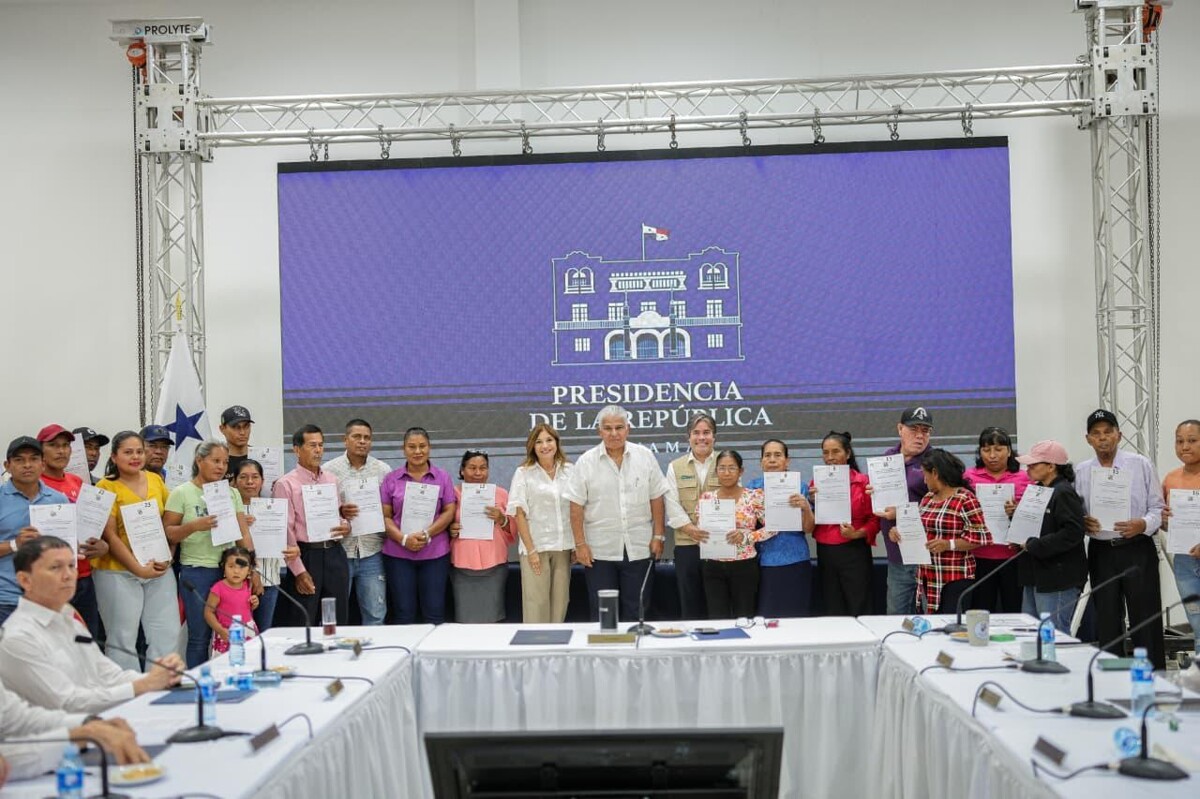
The expanded cabinet of José Raúl Mulino's government arrived with numbers in hand and projects in the works. The province of Coclé today appears as one of the most benefited, with over B/.558 million in public investment already being allocated to roads, health, water, schools, and direct support for producers. Funds that, according to the Executive, must be seen on the streets and felt in the neighborhoods. Mulino indicated that Coclé is not in promises, but in execution. He spoke of employment, confidence, and order. Roads and bridges: the projects that are truly visible. In terms of road infrastructure, the Ministry of Public Works reported 19 macro-projects in Coclé, with an investment exceeding B/.138 million, benefiting more than 270,000 people. Onion, rice, and aquaculture farmers thanked the government for its support but asked for something clear: a firm hand against smuggling and disorderly imports. Florencio Pérez, an onion producer, was direct. He started in Penonomé and it was not an empty speech. Here, according to the MOP, more than 2,000 direct and 3,000 indirect jobs are generated. Health: Rescues, hospitals, and centers that were forgotten. In health, the figures are also significant. But the main event is the new Hospital Aquilino Tejeira, a long-awaited project that will be rescued with B/.214 million. Additionally, improvements were announced for 10 health posts in the province, basic but necessary repairs: roofs, electricity, plumbing, and equipment. Works that were stalled and are now being reactivated, said Minister Fernando Boyd. The Río Hato Health Center was reopened with an investment of over B/.15 million, and the Tambo Maternal and Child Center for B/.9 million. He said that smuggling cannot continue to be treated with 'kid gloves' and demanded that it be punished with the same seriousness as other serious crimes. Mulino responded that he will request a bilateral meeting with Costa Rica to tighten border control. In aquaculture, producers reported that they have recovered 40% of their capacity, but they need agility in permits, sanitary registrations, and procedures. The president gave the order: to unblock processes so that the sector can return to 100% production, at least in the central provinces. Direct support for the producer. MIDA also presented numbers. The producers also had their say. It's no fairy tale: rehabilitated streets, rural roads, new bridges, and others under repair. Among the completed projects are streets in Antón, El Valle, La Pintada, as well as several vehicular and pedestrian bridges. The famous 'pothole-filling' on the Pan-American Highway is underway, while new tenders are being prepared, such as the Penonomé–Santa Ana road, the Penonomé–Caimito–Toabré–La Pinta bypass, and the Aguadulce–Playa El Salao route with a bike lane included. Only the Coclé section of the West Pan-American Highway represents B/.162 million, a project that connects several districts and drives commerce, transportation, and employment. Irrigation programs, access routes to production areas, and financing are underway for the 2025-2026 agricultural cycle. Rice, the basis of the Panamanian plate, remains a priority, along with other items that support the rural Coclé economy. This is part of a record public investment budget of B/.11 billion at the national level, focused—according to his words—on rebuilding the social fabric hit by the economic crisis. Simple things that often hurt the most when they are not there. Agriculture takes the floor and demands a firm hand. The cabinet was not just ministers making nice speeches. MINSA manages projects for over B/.250 million in Coclé.