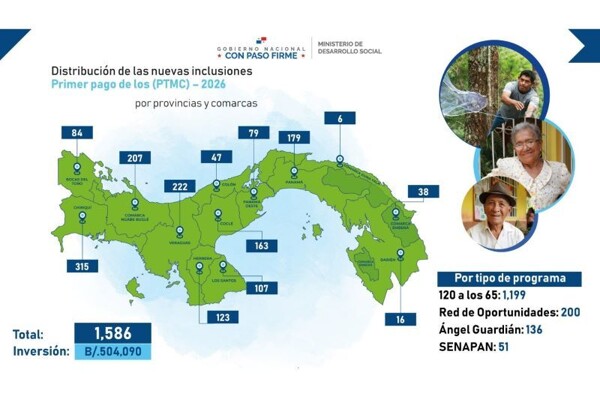
The Ministry of Social Development (MIDES) announced the incorporation of 1,586 new beneficiaries into the Conditional Cash Transfer Programs (PTMC) for the first payment of the year, which will be made next March. The '120 at 65' program concentrates the largest number of new enrollments, with 1,199 beneficiaries, strengthening the economic protection of older persons. Between July 2024 and December 2025, MIDES incorporated 6,142 Panamanians into social programs with a total investment of B/. 54,193,470. Most new enrollments were made through the Social Key Card modality, which concentrates 1,424 beneficiaries (88.03%), while 162 people (11.97%) entered under the hard-to-reach modality, ensuring that aid reaches the country's most remote communities. Currently, the PTMC in its two modalities benefit 186,225 Panamanians, with transfers reaching a global amount of B/. 1,862,070. The majority of new beneficiaries are women, which confirms the high impact of these programs on the economic autonomy and social protection of the female population, especially in vulnerable households. The PTMC not only provide economic support but also promote productive inclusion through participation in sustainable projects and ventures that strengthen the autonomy and resilience of beneficiary families. It is followed by the Network of Opportunities, with 200 new enrollments, expanding support to households living in poverty. While Ángel Guardián adds 136 beneficiaries, reinforcing care for people with severe disabilities, the SENAPAN Food Bonus incorporates 51 new beneficiaries, contributing to the food security of vulnerable families. As for the geographical distribution, the provinces with the highest number of new enrollments are Chiriquí (315), Veraguas (222), the Ngäbe-Buglé Comarca (207), and Panamá (179), reflecting the national reach of the programs and their priority in territories with the greatest social gaps. The incorporation of these new beneficiaries represents an act of social justice and a significant advance in the commitment of the National Government to expand the coverage of social programs towards historically excluded or vulnerable sectors.

MIDES Incorporates 1,586 New Beneficiaries into Social Programs
Panama's Ministry of Social Development announced the inclusion of over 1,500 new citizens into conditional cash transfer programs. These measures aim to support vulnerable groups, including the elderly, families with children, and people with disabilities, with total investments exceeding 54 million dollars.