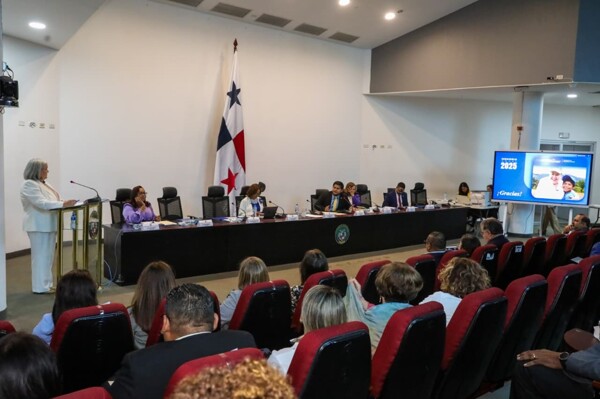
On March 9, 2026, the government established that the committee in charge of planning and implementing actions to consolidate Panama's accession to the Organisation for Economic Co-operation and Development (OECD) will be integrated by the ministries of Foreign Relations, Presidency, Economy and Finance, Trade and Industries, Social Development, Education, and the National Authority for Transparency and Access to Information (Antai), entities that address key issues for the modernization of the State and compliance with the international body's standards. Authorities reiterated that Panama's accession to the OECD represents a strategic opportunity to strengthen institutions and increase competitiveness, but it implies fulfilling a series of requirements focused on strengthening justice and governance, improving the education system, caring for the environment, and fighting corruption. They mentioned that belonging to an organization that promotes policies to improve the economic and social well-being of people worldwide, at a particular moment when Panama is betting on financial stability and employability through the private sector, is crucial to reduce unemployment rates, increase the professionalization of citizens, and achieve that more companies establish themselves in the isthmus. This commission, according to the document issued by the Executive, 'will establish the guidelines and general criteria that will guide the participation of public entities and bodies in the accession process to the OECD'. However, it also clarifies that the Secretariat of Economic Affairs and Competitiveness, attached to the Ministry of the Presidency, will be responsible for coordinating, supervising, and guaranteeing the development of the measures it considers necessary to fulfill its objective in the national interest. Recently, the OECD and the Judicial Branch agreed to strengthen their cooperation agreements to consolidate the independence, efficiency, and modernization of Panama's justice system. The effectiveness of this process, according to Rolando Gordón Canto, dean of the Faculty of Economics of the University of Panama, depends largely on the country leaving the European Union's (EU) list of non-cooperating jurisdictions in tax matters; therefore, actions must focus on meeting the requirements of both organizations. The head of the Division of Global Partnerships, Inclusion and Justice of the OECD's Public Governance Department, Tatyana Teplova, asked the president of the Judicial Branch, María Chen Stanziola, to promote an inclusive and effective system based on evidence. Analyst René Quevedo pointed out, in previous statements, that belonging to this economic group, besides benefits, also has fiscal, labor, economic, and oversight responsibilities to which the country will have to submit once it consolidates its entry. This oversight will lead to the preparation of a report that will be periodically delivered to President José Raúl Mulino, who will evaluate the progress of the strategy carried forward by the Commission that depends functionally on his orders, despite belonging administratively to the Ministry of Foreign Relations (MIRE). The Government, through Executive Decree No.

Panama Creates Committee for OECD Accession
The Panamanian government has formed an inter-ministerial committee to coordinate actions for joining the Organisation for Economic Co-operation and Development (OECD). This step aims to modernize state institutions, enhance economic competitiveness, and meet international standards in key areas such as justice, education, environment, and anti-corruption.