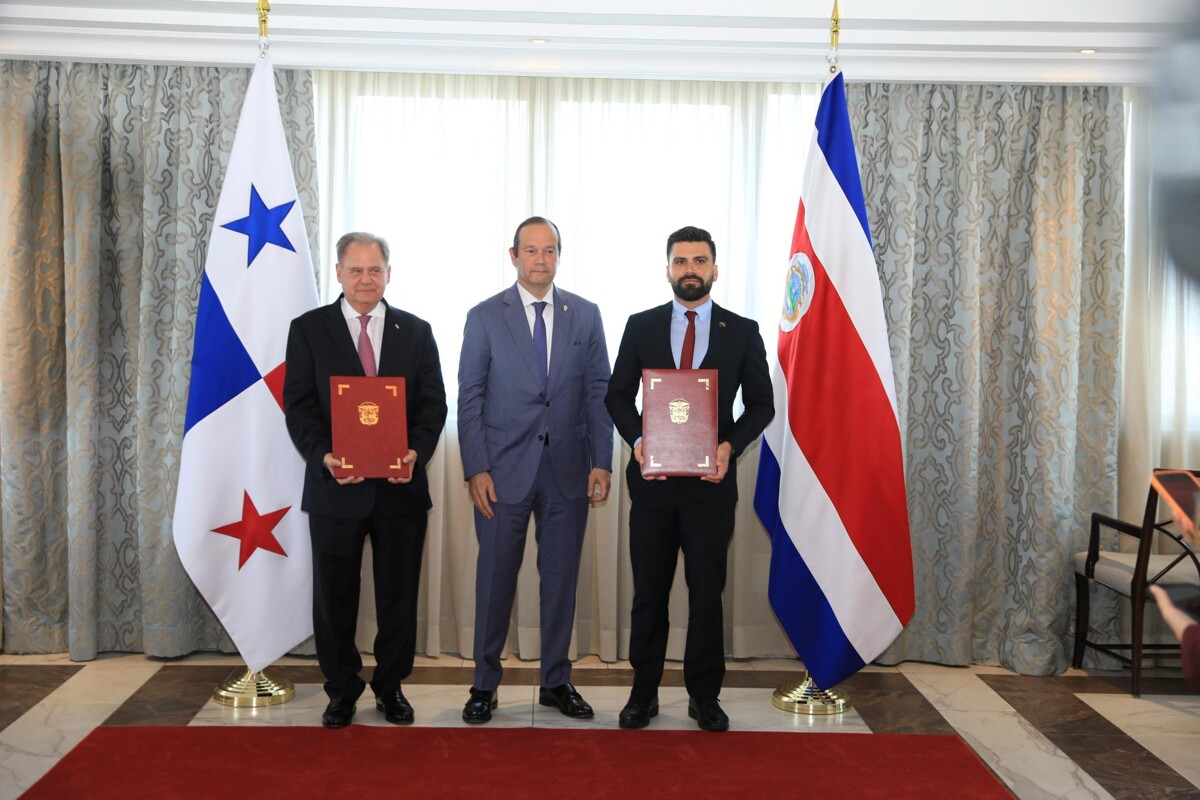
Panama and Costa Rica have signed a Memorandum of Understanding on railway cooperation, marking a historic step. This document lays the foundation for the creation of the Central American Railway Logistics Corridor. The project, which began in January 2025, aims to redefine the region's economic geography, reduce logistics costs, and increase the competitiveness of the Panama Canal. Costa Rica is Panama's first partner in this regional vision, advancing the development of its own railway corridor with a projection towards Nicaragua. This is the first formal step in a chain of agreements that could physically integrate Central America for the first time in its modern history. Panama's Secretary of National Railways, Henry Faarup, emphasized that they are not just building a train, but creating the infrastructure for the next generation of Panama's economy and a new economic geography for Central America. The socioeconomic census, environmental impact studies, and the conceptual design of the railway bridge over the Panama Canal have begun, adopting the standards of the IFC, the World Bank, and the European Investment Bank. Each of the fourteen planned stations is conceived as a local development anchor, nodes that will boost employment, commerce, services, tourism, and new regional economies. The ceremony was attended by the diplomatic corps, and active conversations have been held with the United Kingdom, the European Union, CAF, and BCIE. By January 2026, the Cabinet approved the formal hiring of AECOM USA, Inc. for technical advisory and feasibility studies. To date, there is a preliminary layout of approximately 475 kilometers from Panama City to Paso Canoas, with fourteen projected stations and a first construction phase focused on the Panama Pacific–Divisa section. For Panama, the instrument represents the first formal step in building what the National Government has called the Central American Railway Logistics Corridor.