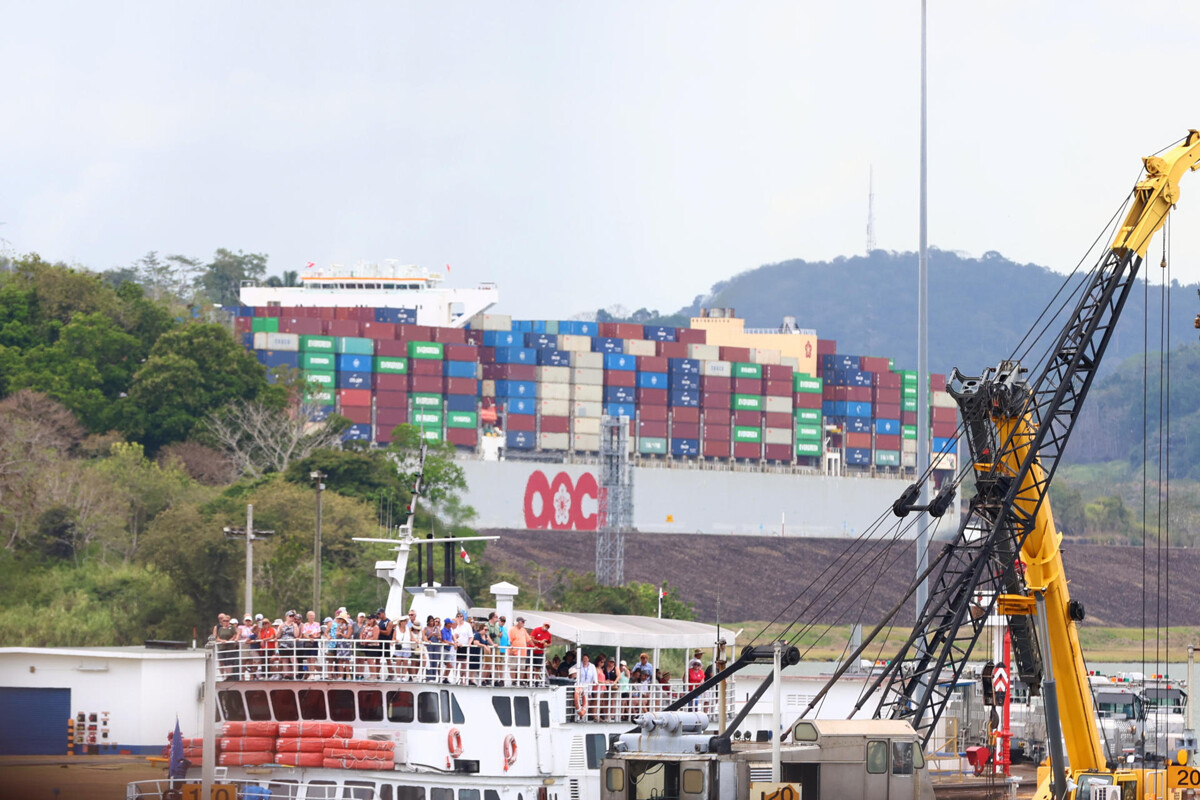
The Panama Canal announced this Friday the new LoTSA 2.5 program for long-term transit slot allocation to 'offer higher levels of certainty, flexibility, and value' to users of the route through which 3% to 6% of world trade passes. 'Among the main changes are a redistribution of slots according to package type and transit direction, the holding of sequential competitions by package type, as well as greater options for date adjustments, slot deferrals, and direction changes, according to the contracted package,' the Panama Canal specified. The 82-kilometer Panama Canal, which connects the Atlantic and the Pacific, is the only one in the world with fresh water. It connects 180 maritime routes and 1,920 ports in 170 countries, and in 2025 it registered 13,404 ship transits. The main user of the Canal is the United States, with around 70% of the cargo that crosses it going to or coming from that country, followed by China and Japan. The sealed-bid auction for LoTSA 2.5 will be held on April 28, 2026, while the program's implementation is scheduled for May 16, 2026, with transit dates between July 5, 2026, and January 2, 2027. The new LoTSA 2.5 maintains the general structure of the Long-Term Slot Allocation Program, incorporating operational improvements for more efficient planning aligned with market dynamics, the administration of the waterway said in a press release.