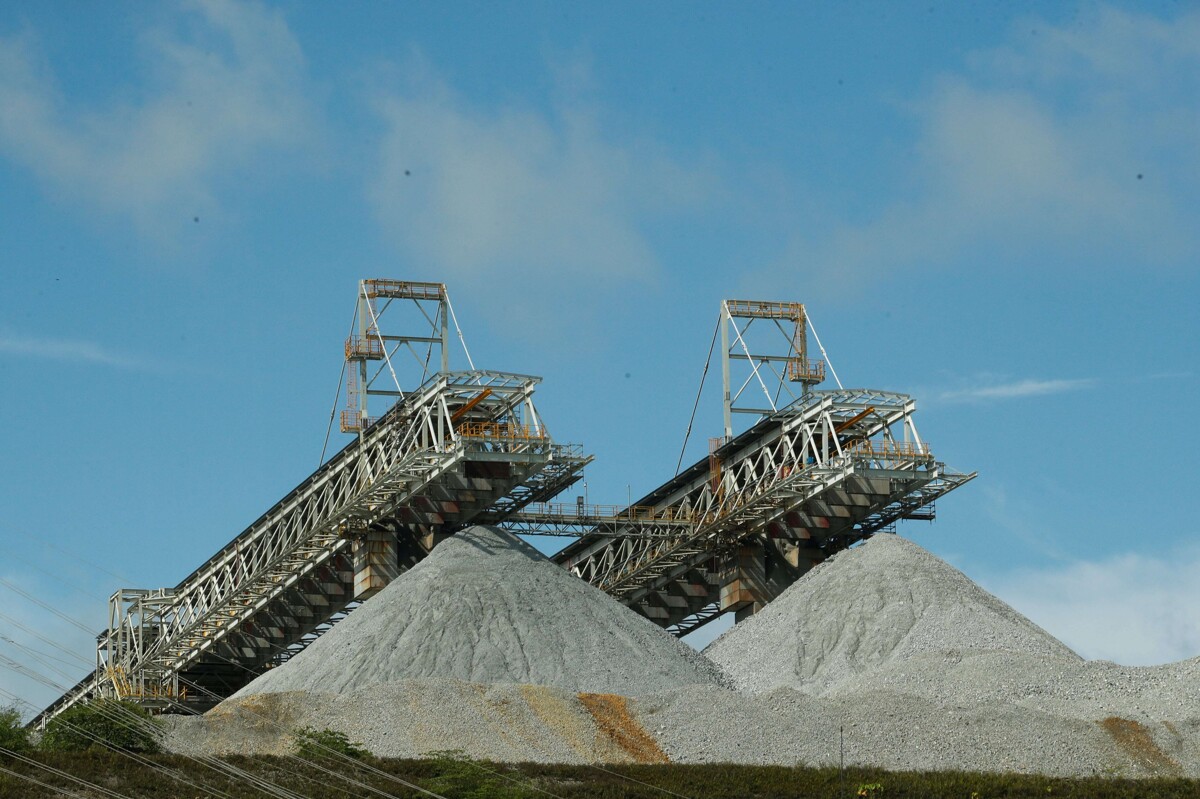
Processing the accumulated rock under a clear plan and in coordination with the operating company is the fastest way to show that Panama has not given up on being a serious actor in the copper economy, even as it continues to debate the mining model it wants for the future. Markets read signals, not speeches. The approval to process the accumulated rock at Cobre Panamá is one of them. In a limited timeframe, with a defined volume of ore, Panama can demonstrate three things at once: first, that it is capable of executing an industrial plan without setbacks; second, that it can turn a non-performing asset into cash flow for the state and local suppliers; and third, that it knows how to insert itself into global value chains of a metal that is key to the energy transition, at a time when the world is wondering where the copper needed to electrify everything will come from. It is worth looking at it from a regional perspective. While countries like Peru and Chile compete for every additional ton of copper and adjust regulations not to lose their appeal, Panama has in this accumulated rock a quick opportunity to move from stagnation to limited and well-defined economic activity, without reopening the mine. In a world where copper supply faces tensions and projected deficits are accumulating towards 2030 and 2040, failing to take advantage of that advantage would simply be a luxury the country cannot afford. Therefore, more than a footnote to the current situation, the approval to process the accumulated rock at Cobre Panamá should be read as a message for the future. If Panama manages to show that it can manage this stage with predictability, transparency in economic results, and tangible benefits for communities, it will have taken a decisive step to reposition itself as a reliable country, not only for copper, but for any long-term bet. The author is a communications consultant at Cobre Panamá. Not only because it activates a high-impact industrial operation, but because it sends a message that Panama is willing to manage a complex problem with a cool head and turn a costly inertia into a tangible economic opportunity. At the heart of this decision is a simple and compelling fact. In Panama, there is installed industrial capacity, there is trained human capital, there is energy and logistics infrastructure, and there is a willingness to do things in an orderly manner. That is exactly the image Panama needs to project if it wants to attract investment in sectors such as energy, advanced logistics, or technology. The rock material, seen this way, becomes a pilot test of economic governance. For a small country like Panama, for a global company to include the processing of ore in Donoso, with a defined schedule and volumes, means that the financial world is starting to discount that the country is steering the situation of its main mining asset. The reputational impact goes beyond the sector itself. The processing plan for the accumulated rock itself provides for the hiring of at least 1,200 new people, in addition to the staff already linked to the operation, and activates indirect jobs in transportation, logistics, services, and supply of equipment and food. Linking the processing of the accumulated rock to concrete, measurable results for citizens is an opportunity to change the conversation from the abstraction of figures to the concreteness of benefits. The success of this process in the next twelve months will be watched with a magnifying glass by rating agencies, banks, commodity traders, and potential investors in other sectors. Cobre Panamá came to represent around 1% of the world's copper production and about 5% of Panama's GDP in 2022. That move, in a twelve-month period, allows for breathing life into local economies that had been on pause. But perhaps the most powerful message is less in the payroll and more on the international scoreboard. It is not about copying foreign models, but about sending its own signal. The government has put in place an independent audit scheme that reviews the operation's performance in environmental, social, fiscal, and operational dimensions, with a report expected for this year. It is the difference between a territory that is slowly fading and a territory that starts moving again: trucks working, workshops opening, and small businesses recovering their clientele. That single fact reinforces the narrative of a country that does not act blindly, but measures, certifies, and makes decisions based on data. There are decisions that weigh more than they seem at first glance. That magnitude does not disappear overnight in country risk models or in the analyses of major investment firms. By 2025, more than 122,000 tons of stored concentrate had been sold, generating nearly $30 million in royalties, channeled into visible projects such as health centers, school expansions, road repairs, and improvements in water and electricity. When a neighbor sees that the road they use daily is being repaired with income from a non-performing asset, the discussion stops being just ideological and becomes everyday. There is also an element of institutional credibility that should not be underestimated. It is ore that already exists, has already been extracted, is already there. In Donoso, there are about 38 million tons of already fragmented ore, ready to be processed, with the potential to produce about 70,000 tons of copper in about a year. Turning it into exportable concentrate is not opening a new extractive chapter; it is preventing that inventory from becoming a story of waste and loss of value for the country. The economic effect is direct and immediate. First Quantum has indicated that the processing of this rock can contribute about 70,000 tons of copper and has incorporated that temporary contribution into its future production guidelines.