Digital transformation, the growth in data consumption, and the strengthening of cybersecurity are emerging as pillars to modernize public services and strengthen Panama's technological competitiveness.
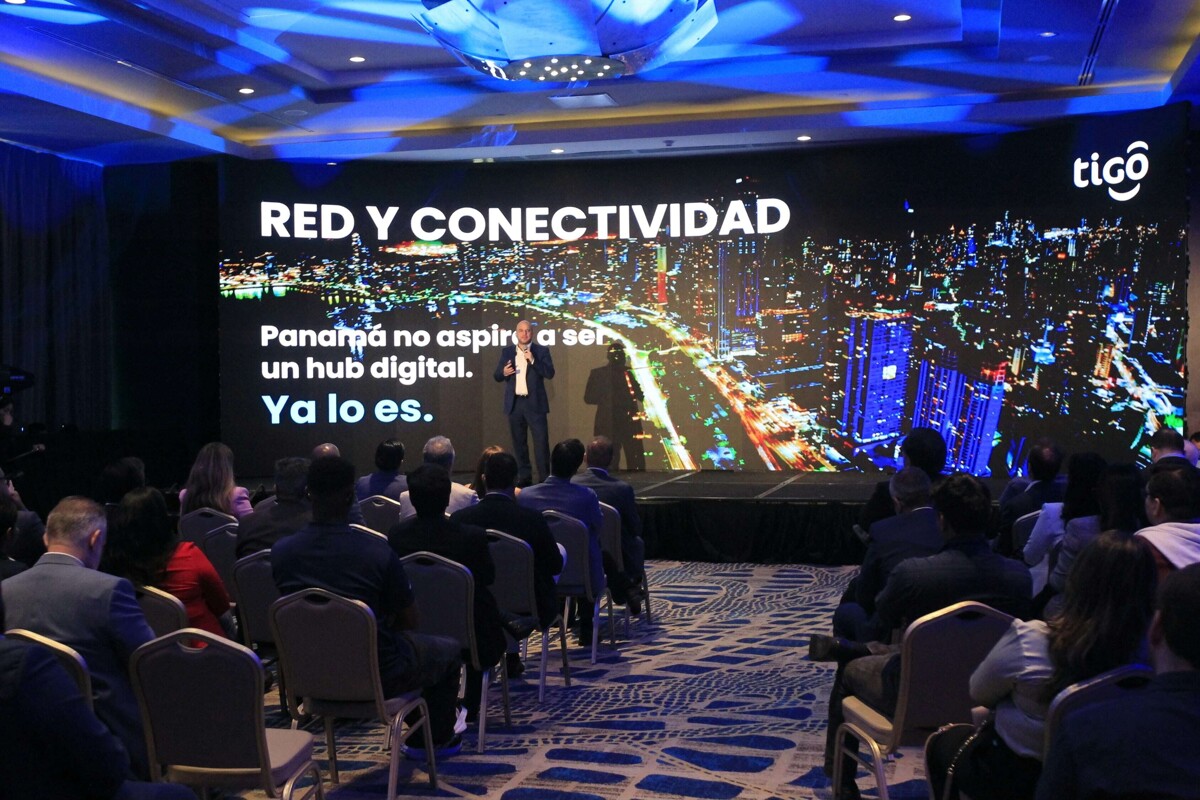
Representatives from the technology and telecommunications sectors addressed these challenges during an event organized by Tigo Panama, where opportunities were analyzed to advance towards a more digital state and citizen-centric services.
Bernardo Pañoni, Executive Director of B2B, explained that one of the main objectives is to strengthen the connectivity and resilience of the digital platforms used by both state institutions and citizens.
"What we are looking for is to build these increasingly resilient highways so that connectivity, for both government institutions and citizens, is better and better," he stated.
In this context, the executive announced that a study on the level of cybersecurity maturity in Panama is currently being developed, prepared over the last few months, with the purpose of assisting public institutions in strengthening their operational resilience.
Pañoni also emphasized that technology acts as an accelerator to improve the relationship between the state and its citizens.
The executive added that digital modernization also contributes to building a more efficient and competitive state in the region.
In particular, he highlighted Panama's potential to consolidate itself as a Digital Hub of the Americas, which could boost the development of the digital economy and attract new investments to the country.
During the event, Juan José de Dios, General Manager of Tigo Panama, stressed that connectivity will be a central element in the development of modern economies.
"It doesn't matter where you are, what you do, or what your institution is: we all have a digital future," he affirmed.
The executive explained that sectors such as education, health, e-commerce, and digital government depend on increasingly robust networks capable of supporting the accelerated growth of data traffic.
"Data consumption does not grow linearly, but exponentially. According to data presented during the event, 4.8 trillion cyberattack attempts were recorded in Panama in the last year, highlighting the need to strengthen user and digital asset protection.
The first panel featured speakers Jorge Saa, Country Manager for Microsoft in Panama; Aldo Muñiz, Customer Engineer for Google, and Carlos Alvarado, Director of Digital Business Development for Tigo Business.
Another panel addressed the role of cloud computing as an enabler of digital transformation in the public sector.
Specialists from the technology ecosystem noted that the adoption of cloud solutions allows for modernizing platforms, improving system resilience, and offering more efficient services to citizens.
However, they warned that this process must be accompanied by clear governance strategies, talent development, and adequate regulatory frameworks.
In this context, it was highlighted that Panama has instruments such as Panama's Personal Data Protection Law 81, which establishes principles for the responsible handling of information and allows for the advancement of hybrid cloud models in the public sector.
Participants agreed that, thanks to its logistical and technological position, Panama has the potential to consolidate itself as a regional digital hub, as long as it continues to promote investments in connectivity, innovation, and cybersecurity.
In turn, the panel was led by: Giovanni Carpanetti, Security Solutions Manager for Central America and the Caribbean at Microsoft; Fernando Montes, Senior Director of Growth Strategy for Telcos in Latin America at Fortinet, and Luis Castaneda, Regional Director at Exabeam.
"We are using more applications, high-resolution videos, and real-time services every day," he explained.
The event also featured Sebastián González, Director of B2B Products at Millicom, who highlighted the importance of building robust technological platforms that can meet the new demands of the digital ecosystem.
The executive stated that digital development must focus on citizen needs and the creation of secure, flexible, and resilient platforms.
"We need to build an agile, flexible, secure, and resilient platform that allows us to respond to the needs of the digital citizen," he affirmed.
González also stressed the importance of expanding the access network, strengthening the cybersecurity of digital transactions, and promoting technological adoption and the development of specialized talent in the country.
During a panel on digital governance and artificial intelligence, experts noted that these technologies are already generating concrete impacts on public administration.
The specialists also warned that the adoption of these technologies brings new challenges in terms of cybersecurity.