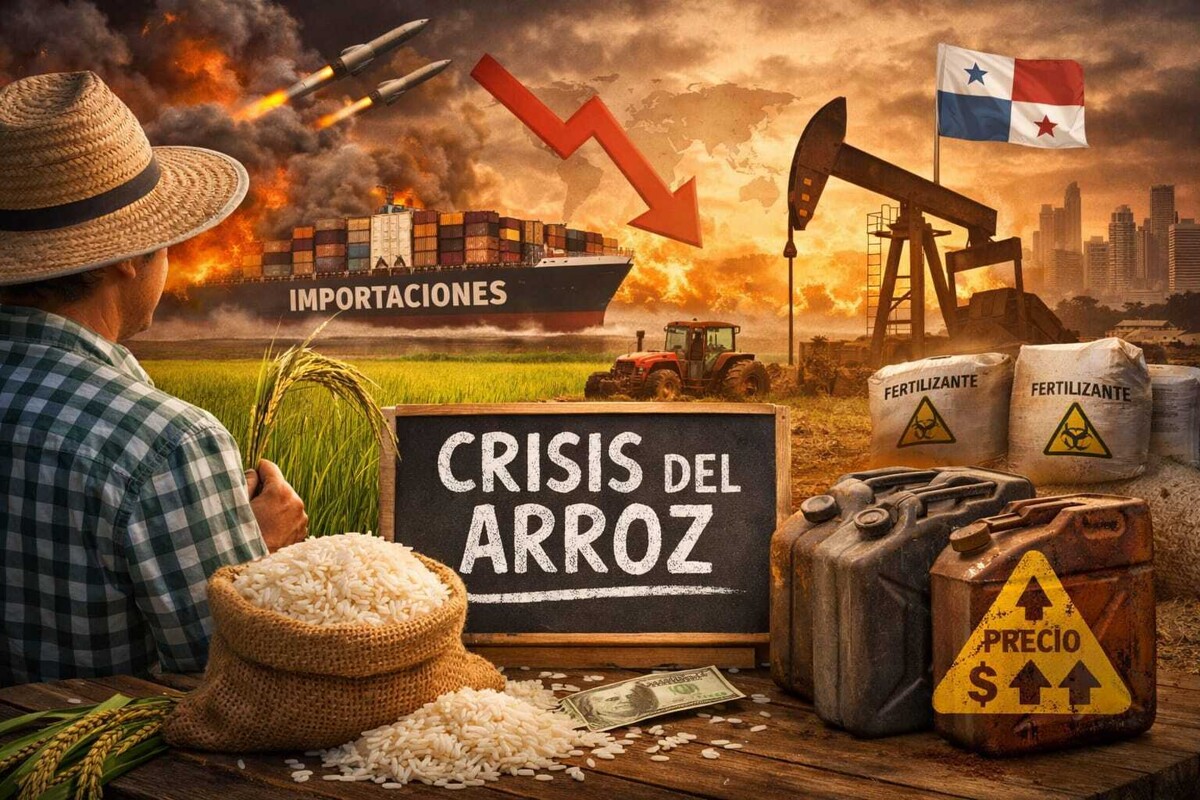
«We buy what's left… and at the price that's left», summarized the producer. This implies paying more for inputs and facing greater risks of scarcity. Although Panama produces about 9 million hundredweight of paddy rice, once milled, this figure drops to less than 5 million hundredweight. This leaves the country dependent on: domestic production, treaty quotas, and imports due to shortages. For now, supply is guaranteed until October 2026, thanks to previous harvests and quotas already entered. But the real risk lies ahead. 2027: the year of uncertainty. If high costs discourage planting in 2026, Panama could face a deficit in 2027. And here arises the big question: import or produce? Spiegel is clear: importing may be necessary, but also dangerous. «If the global crisis worsens and countries close their exports, Panama could be left without access to food», he warned. The rice sector has already presented proposals to the Executive to mitigate the impact, but the final decision is political: subsidize costs? allow price increases? open the door to imports? «We are ready to keep producing, but someone has to decide how to sustain the chain», he pointed out. Although current rice will not see major immediate increases, the hikes have already begun to filter in: more expensive electricity, higher transportation costs, rising packaging (plastic). This means that in the coming days, gradual adjustments in the price of rice could be recorded, even before the new harvest. For the producer, Panama is repeating its mistakes. The pandemic left a clear warning about external dependence… but no structural measures were taken. Today, the country faces a new crisis without sufficient preparation. The solution? Produce inputs locally. Among the alternatives proposed is attracting agrochemical and fertilizer companies to produce locally, reduce external dependence, and shield production. «A country cannot leave its food in the hands of third parties», emphasized Spiegel. Rice: more than a product, it's a state matter.