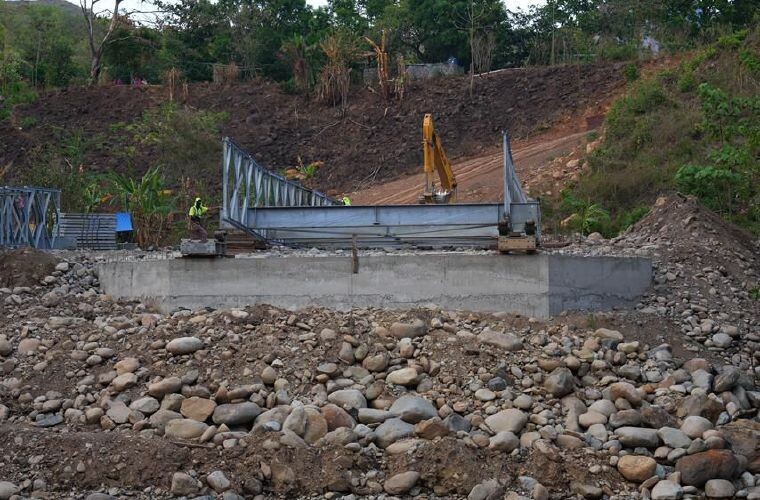
Non-existent roads, dangerous rivers, and long hikes have been part of the daily routine for hundreds of families, especially students who had to risk their safety to reach their educational centers. Now, this landscape is beginning to transform with the construction of brushwood bridges in areas like Cascabel, in Mironó, and Sardina, in Nole Duima, where work is already underway, materials are being mobilized, and structures are being erected on challenging terrain. Before starting the construction, the main challenge was to open access to areas where there were no roads. In Sardina, for example, a route was enabled in just a few weeks to transport equipment and begin the construction of a 50-meter bridge over the Santiago River, an infrastructure that will allow students and residents to travel with greater safety. For years, crossing fast-flowing rivers or waiting for the water level to subside was the only option to attend school. During the rainy season, many communities were cut off. For this initial phase, 18 million dollars have been allocated, with which it is planned to build the first 50 bridges. The works aim to improve mobility, reduce isolation, and offer greater safety to the communities. With the new bridges, the goal is to reduce risks and guarantee permanent connectivity. The project directly impacts more than 17,000 students in regions such as Kodri, Ñokribo, and Nedrini, within a first phase already being executed in the field. The investment comes, in part, from the royalties generated by the sale of copper concentrate, resources that have begun to be allocated to works in areas with the greatest needs. In places where travel previously implied constant risk, the infrastructure is beginning to make a tangible difference in the daily lives of its inhabitants. Hard-to-reach communities within the comarca are beginning to see concrete changes after years of isolation.