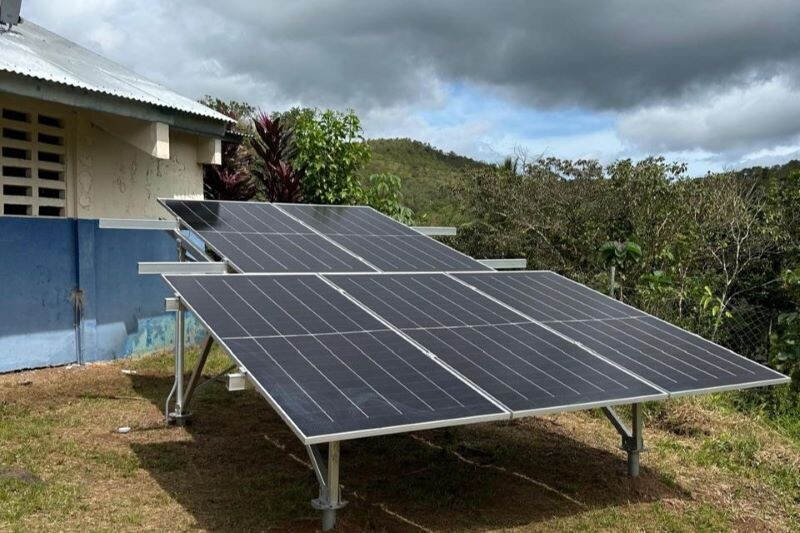
Through a joint effort between AES Panamá and the Rural Electrification Office (OER), multiple educational centers located in hard-to-reach areas now have access to electricity, generating a positive impact on the education of more than 500 children and teachers.
Educational transformation in hard-to-reach communities One of the highlights of this program was recorded at the Calabacito School. The institutional planning contemplates a total reach of 15 educational centers, so it is expected to complete the work on the remaining seven schools during the course of this year.
AES Panamá and the Rural Electrification Office reaffirmed their commitment to maintaining the expansion of this service in the most remote areas of the Panamanian geography.
Eight rural schools in Panama now have electricity from solar panels • A joint project between AES Panamá and the Rural Electrification Office benefits more than 500 students in hard-to-reach areas of the country. According to reports from teachers and parents, the availability of lighting and energy in the classrooms allows for the creation of safer and more suitable study spaces for the comprehensive development of the student population.
Advances and goals of the rural electrification plan To date, a total of eight schools in the national territory have been equipped with electricity through the use of solar panels.
At this institution, a group of 40 students celebrated their graduation ceremony and dinner with an electricity supply for the first time in years, an event that represented a source of pride and hope for the families and teachers of that locality. Similarly, the project extended electrical coverage to the Boca de Macho School, which benefits 140 students, and to the Cerro Iglesia School, which has an enrollment of 12 students.
The initiative's leaders state that electrifying academic institutions strengthens communities and directly contributes to building a better future for the country from its own territories.