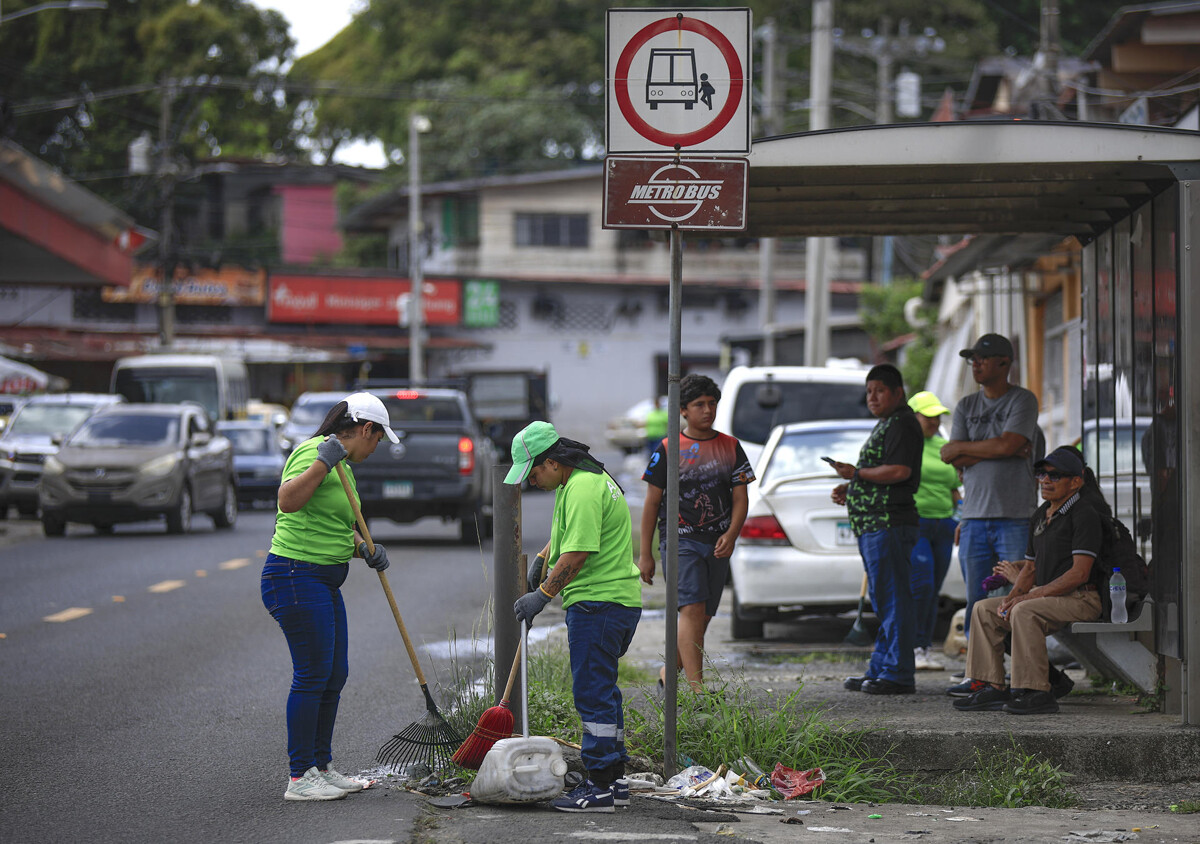
Around 70 of the nearly 700 inmates swapped their white shirts for blue ones, taking brooms and dustpans in hand, to participate in a cleanup day in San Miguelito, one of the districts hardest hit by the garbage crisis in Panama. For many, it was their first time leaving the prison in years. "We found a district on the verge of collapse, with garbage accumulated for months," explained the administrator of the Sanitation Authority, Ovil Moreno. The situation reflects the magnitude of the waste crisis in Panama, a country with 4.2 million inhabitants that generates 4,372 tons of garbage per day. During the bus ride, the inmates sang and talked about their plans after regaining their freedom as they headed to the first point of the operation. San Miguelito, located on the outskirts of Panama City, has become a barometer of the serious solid waste problem. The district, marked by high levels of poverty and crime, has been dragging mountains of garbage accumulated on main streets and sidewalks for years, causing a severe health crisis. "We have found too much garbage. I ask the community to be aware and take care of the place where we live to enjoy good health," inmate Otis Puertas told EFE. The cleanup plan began on January 19, after the departure of the company that held the concession for the collection service for 25 years. It includes the deployment of dump trucks, excavators, and compacters, as well as the participation of 70 female inmates and 25 male inmates, according to official figures. In a single day, 300 tons of waste were collected in San Miguelito, a district that concentrates about 280,000 inhabitants in just 50 square kilometers. Of that total, only 57.8% is collected, while about 2,500 tons end up in rivers, seas, or other ecosystems. Much of the waste ends up in open-air landfills, such as Cerro Patacón, the largest in the country. In San Miguelito, the government took control of the service after the concessionaire left, even though the city hall had already designed its own plan. Less than 10% of the waste is reused, due to scarce infrastructure, lack of separation, and low environmental awareness, according to the Ministry of the Environment. Waste management has also become a politicized issue. Additionally, the program includes a benefit: sentence reduction, with one day less of sentence for every two days of community work. Under that landfill lives an indigenous community that suffers from leachate leaks and inhalation of toxic fumes from recurring fires, with serious health effects. "We are starting a plan to eliminate open-air landfills, because this waste ends up polluting the seas," Moreno said, while heavy machinery loaded tons of garbage. Panama is among the countries with the highest waste generation per capita in Latin America and has a limited recycling system. "We are here to support and to see a cleaner and better place." From early hours, a group of inmates from the Women's Penitentiary Center of Panama formed a line with enthusiasm to leave the prison for a few hours. The situation was even criticized by the singer-songwriter Rubén Blades, who questioned the politicization of the problem on his blog. While the debate continues, the inmates continue sweeping streets among broken glass, spilled bags, and birds flying over mounds of garbage that repeat themselves at every corner of the district.