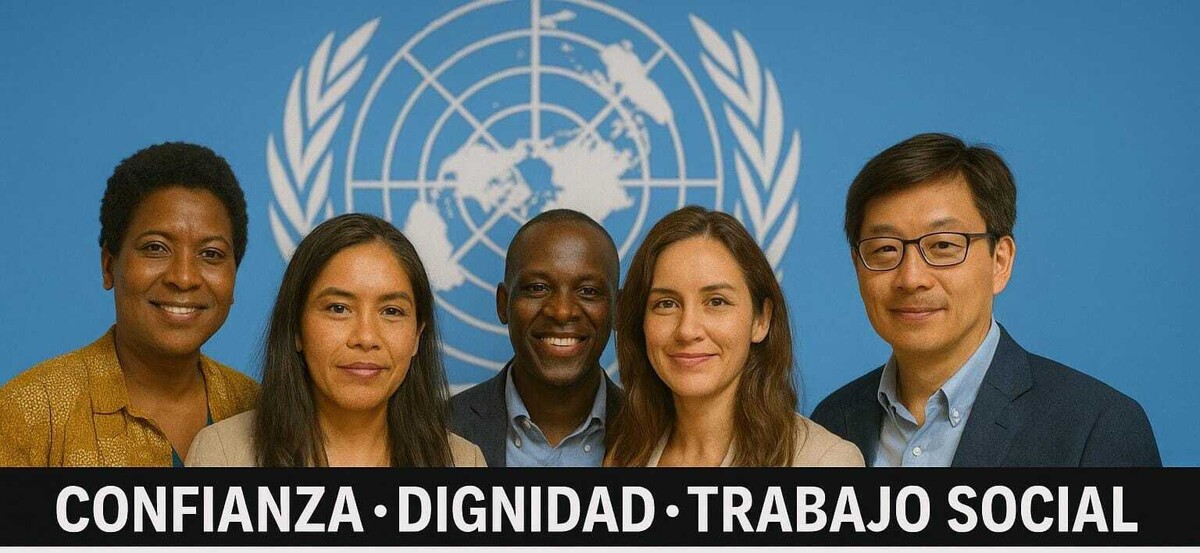
A recent report from the United Nations Special Rapporteur on extreme poverty and human rights recognizes the essential role played by social workers in building more just, inclusive, and humane societies. The document, received with great satisfaction by the International Federation of Social Workers (IFSW), emphasizes that the work of Social Work goes far beyond individual accompaniment: it seeks to empower individuals and communities by connecting them with sustainable solutions and promoting relationships based on trust, participation, and dignity. The report cites the IFSW's World Statement of Ethical Principles as a reference for a professional practice committed to human rights and equitable development. In this sense, it recognizes social workers as key actors in social transformation, community strengthening, and the promotion of collective well-being. During the preparation of the document, an IFSW delegation participated in the consultation convened by the Special Rapporteur, Olivier De Schutter. On that occasion, the IFSW's Global Vice President, Kenia Batista, and the Regional Representative to the UN for Europe, Swetha Rao Dhananka, offered valuable perspectives on the impact of Social Work on social protection systems and the defense of human rights. 'This UN report highlights the indispensable role that social workers play in building inclusive societies, and it recognizes that when systems respect the values of Social Work—trust, participation, and dignity—lives are transformed and communities are strengthened,' expressed Batista. For her part, Rao Dhananka highlighted the opportunity that participating in the discussion groups with the Special Rapporteur represented: 'It was an opportunity to make visible the essential contributions of social workers in the advancement of human rights at the community level. The report reflects the daily reality of those who defend dignity and inclusion, often in difficult conditions,' she noted. The report also warns that technological and administrative systems must complement, not replace, the human relationships that constitute the essence of Social Work. It further reaffirms the ethical principles of the IFSW, recalling that a sustainable social protection depends on mutual respect, professional integrity, and a collective commitment to human rights. The Acting Secretary-General of the IFSW, Pascal Rudin, considered that this UN recognition 'reinforces the vision that the organization has historically upheld.' 'Social workers are pillars of sustainable and equitable development. Our values of empathy, justice, and respect are indispensable for building well-being systems that empower people, strengthen the sense of belonging, and protect the environment,' he emphasized. Finally, the IFSW called on governments and international organizations to work hand in hand with Social Work professionals to consolidate inclusive, reliable, and human rights-based well-being systems as a way to achieve true equality and well-being for all.