Social researcher Gilberto Toro revealed that Panama has allowed organized crime to become more orderly than the state itself, an uncomfortable and direct diagnosis given on the program "Protagonists of the Truth".
Toro started by warning that he was making a "parenthesis" from his usual prevention approach, but the reality he described forced him to speak clearly.
"Meanwhile, the criminal market offers immediate income, without humiliation and without the political game," he said. His reflection began with a paradox: if drugs are garbage, why do official and media discourses give them a price, weight, and market value? This contradiction ends up building a devastating message for new generations: what is supposed to destroy lives also moves "thousands, millions, and even trillions of dollars".
A global corporation and a fractured state According to Toro, organized crime operates as "a transnational corporation," with producers, exporters, consumers, logistics, ports, and capital.
"This inequality is the fuel for crime," he warned. Toro warned that if the country continues to ignore the signs, the population will end up asking for a "savior" with a heavy hand.
"I am not a proponent of the Bukele model, but when people cross their arms, they end up begging for someone to come and solve what the State abandoned," he said.
Politics as an obstacle and not a solution The researcher denounced that complete plans, such as those developed by organizations in Colón for their comprehensive development, ended up archived because they do not bear the initials of the current President.
A final warning Toro closed with a message that left the studio in silence: "Those of us who work in the community fight every day so that a young man does not make the decision to shoot, steal, or affiliate with crime. And as long as society remains disorganized, crime will keep the advantage."
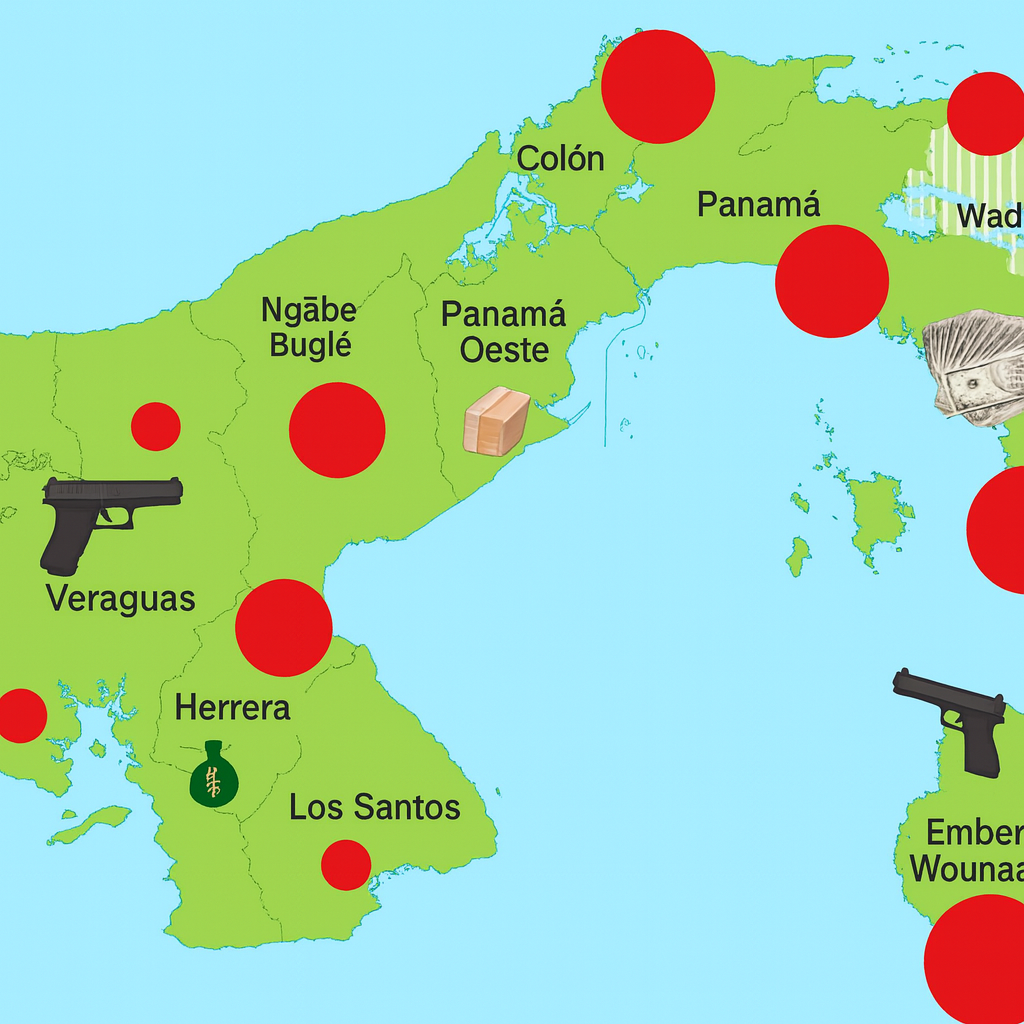
Colón, the mirror of the country The Colón native spoke with authority about his province: a depressed economy, strategic ports, and an accelerated reproduction of gangs.
"Colón is the mirror of what happens throughout the Republic. The difference is that here it is impossible to hide it," he affirmed. And he questioned how such a small territory can have more than 20 active criminal groups: "Like Gremlins: one drop falls and five more appear."
Inequality: the root that no one wants to touch For Toro, the central problem is the terrible distribution of wealth, a social bomb that Panama has dragged for decades.
"We have accepted that here there are millions of poor and a few millionaires. What do you think someone who just wants to survive will choose?" Toro asked.
Toro asked to imagine two organizational charts: that of organized crime, complete, functional, with defined roles from the top down to the "messenger via WhatsApp." And that of the State, "a disaster": non-existent prevention, late intervention, unapplied laws, disorderly penitentiary centers, and criminological policies archived due to political ego.
"No institution can be called organized. And Panamanian society, hit by informality and increasing poverty, has seen the emergence of a silent phenomenon: families that see crime as an 'enterprise' capable of paying for electricity, rent, a car, and vacations, without depending on politicians, favor lists, or miserable salaries," he said.
"A young bilingual person enters the labor market with 500 dollars," he denounced.