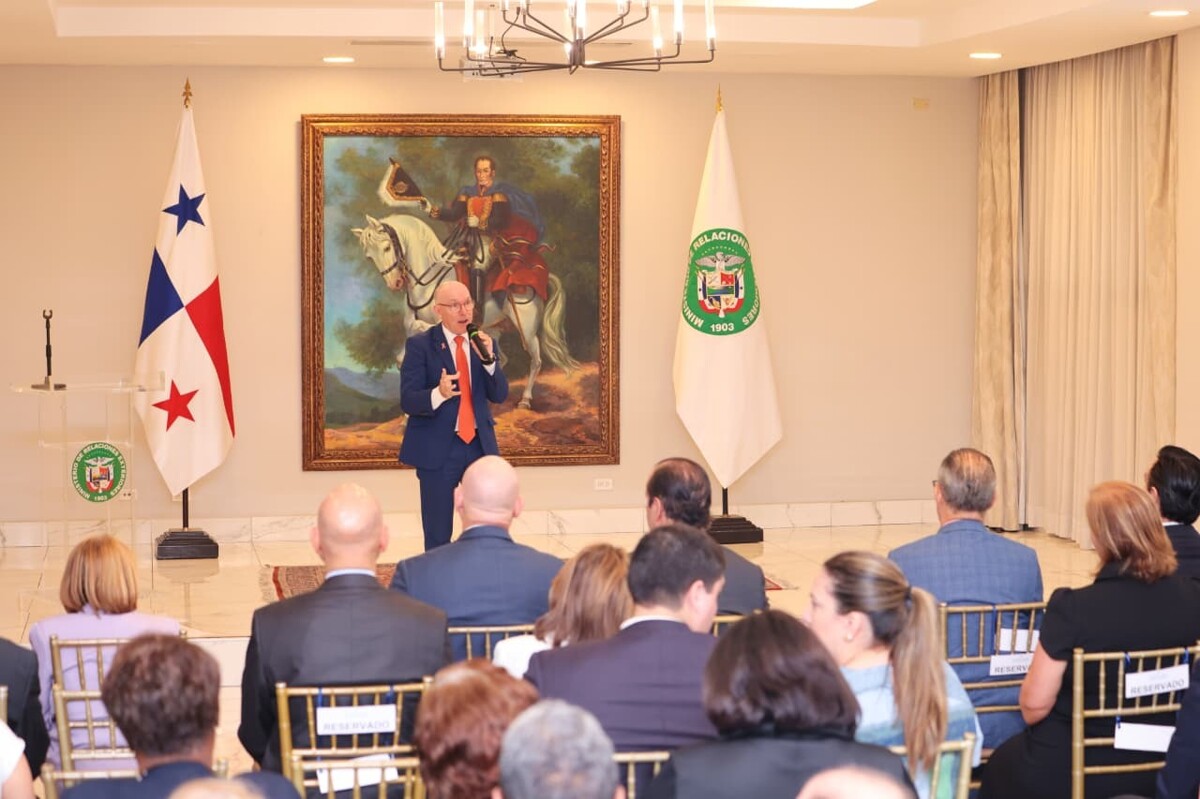
The Minister of Foreign Affairs, Javier Martínez-Acha Vásquez, reiterated Panama's firm commitment to disarmament and nuclear non-proliferation, emphasizing that “treaties, control systems, and diplomacy are the thin line separating civilization from its extinction.” He proposed strengthening the moratorium on nuclear tests, offering phased commitments to nuclear powers that have not yet ratified the treaty, regionalizing the ban on tests, and rewarding states that tie their hands in favor of peace. Panama, a small state without nuclear weapons and with a historical vocation for multilateralism, will continue to promote the strengthening of this Treaty, pushing forward proposals, actively participating in forums, and putting its diplomatic and technical platform at the service of peace, international security, and the definitive ban on nuclear tests. The Deputy Minister of Multilateral Affairs and Cooperation, Carlos Guevara Mann, stressed that receiving the Executive Secretary of the CTBTO at the Bolívar Palace, cradle of American multilateralism, “symbolically links the historical legacy of the Congress of Panama in 1826 with contemporary efforts to prevent the repetition of the nuclear horror.” Dr. Robert Floyd recalled his visit to Nagasaki on the 80th anniversary of the atomic bombing and, based on that testimony, explained the evolution of nuclear tests since 1945. He pointed out that although the CTBT has not yet formally entered into force, it has generated the longest moratorium on nuclear tests in recent history, reducing the number of tests from over 2,000 before 1996 to only a handful since it opened for signature. It is relevant to note that the Treaty's technical infrastructure generates additional benefits for humanity by supporting tsunami early warning systems, seismic surveillance, volcano monitoring, and offshore search and rescue operations, demonstrating the humanitarian utility of these technological capabilities. We agree that the Comprehensive Nuclear-Test-Ban Treaty represents “a beacon of hope,” capable of sustaining a widely accepted norm against tests even before its entry into force. The article was first published in La Verdad Panamá.