The Commission and the Inter-American Court of Human Rights have reiterated that expert testimony must be competent, impartial, and technically grounded, and that when an expert lacks competence or shows bias, their report can be limited or dismissed by the court. The Inter-American line indicates that reports cannot become simple arguments for the parties, but must be objective tools to clarify facts.
“When someone wants to harm someone at all costs, those who assist must also be investigated and brought to justice,” he emphasized.
The system is scientific, not arbitrary Lawyer Víctor Chan Castillo recalled that the Accusatory Penal System is based on scientific foundations. It is not a temporary phenomenon, but a flaw that the penal system has dragged along for a long time.
Luis Fuentes Montenegro warns that a police report can barely be considered an indication and does not constitute full proof. “This affects everyone, not just the accused,” he explained.
The role of the Public Ministry For Chan Castillo, the Public Ministry must guarantee an objective investigation. “It is not about protecting one side, but the system. The court must assess with logic and sound criticism, free from passions or pressures,” he indicated.
From another perspective, forensic lawyer David Villarreal emphasizes that any expert must be competent, objective, and apply protocols recognized by the scientific community. Villarreal was clear: “A police report is subjective. ‘The problem is when it is configured with abuses, errors, or bad intentions and responsibility is not demanded from those who prepare it,’ he explained.
Makeup that twists justice The jurist argues that when a report is distorted or ‘made up,’ the penal justice begins to limp. If the evidence is born without technical support, its weight is diluted within the process.
A warning to the system Jurists agree that allowing reports without rigor to guide investigations not only affects the accused but weakens the country's penal justice. In practice, processes that start fragile and without foundation, accusations sustained more in narrative than in science, end in a trial that ends up collapsing.
The entry ‘Police Reports Under the Microscope: Lawyers Denounce Abuses, Tampered Evidence, and Planting Evidence’ was first published in La Verdad Panamá. “It is a regrettable reality that violates the Rule of Law,” he warned. In his opinion, these manipulations often operate with complicity. “There is no immediate accountability for police who falsify content, expert reports, or create guilt on a whim,” he pointed out.
For Fuentes Montenegro, the cleansing must be real. “There must be immediate criminal liability. Remove them from their post, dismiss them, and if it warrants prison, apply it,” he said.
Javier Collins Agnew / La Verdad Panamá In the Accusatory Penal System, the police report should serve as a starting point for an investigation, not a pre-sentence. “Every police report lacks probative value if it does not have certainty. However, for several criminal lawyers in Panama, that document is often used as if it were absolute truth, even when it lacks technical foundation.
A problem that is not new The questioning of police reports is not new. “There cannot be tolerance for police who engage in tampering with evidence,” he stated.
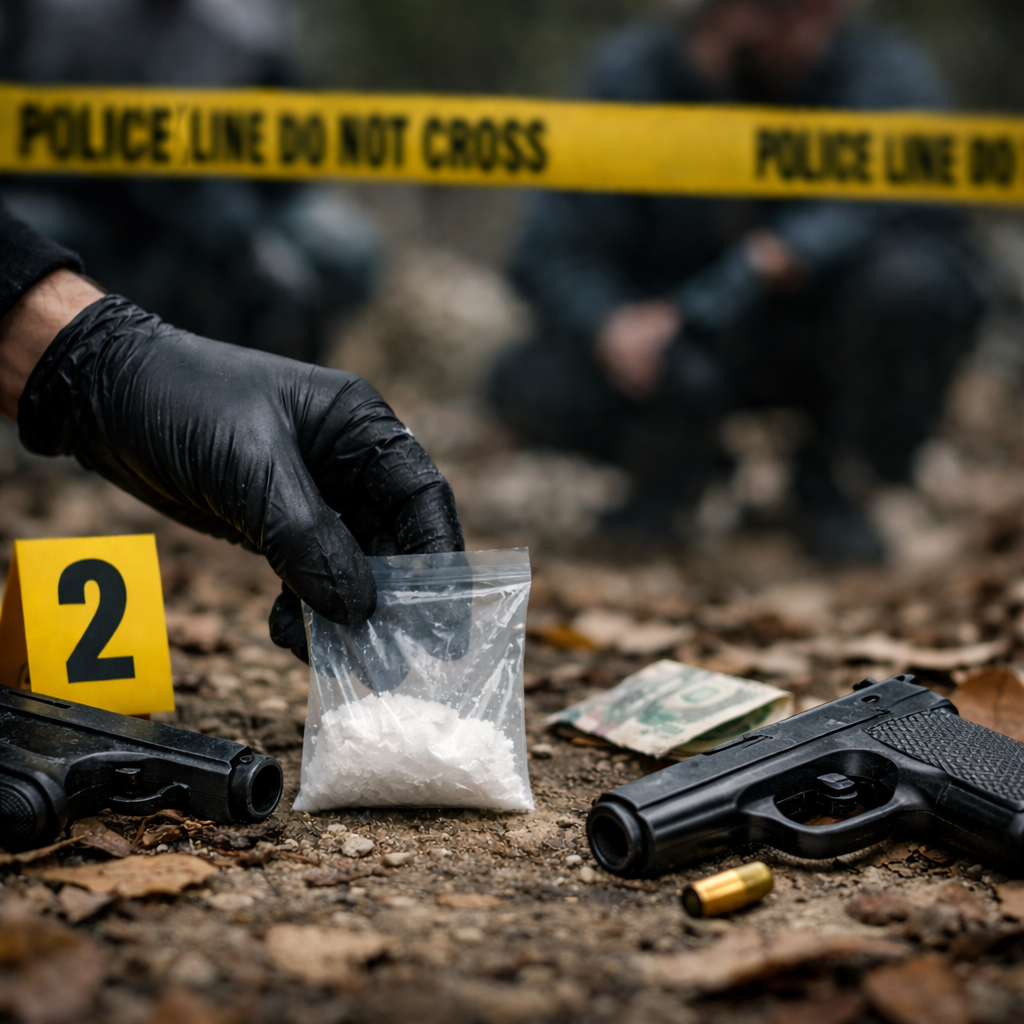
Planting evidence does exist The lawyer dismantles the myth. “It has nothing technical or scientific about it. The real value of the evidence corresponds to the judge according to sound criticism,” he specified.
The questioning is not only local “If it is poorly prepared, it should be dismissed by whoever investigates objectively,” he maintained. Chan was direct: accepting defective reports should not even be part of a serious investigation. “A poorly done report should not walk in a process that is said to be scientific,” he expressed. Additionally, he pointed out that thinking about planting evidence is acting against the Constitution. It exists in real processes, in high-profile cases, and in others that go unnoticed.
Lawyers, judges, and defenders have been warning for years that the practice of supporting investigations on weak or doctored reports repeats itself in different periods and administrations. ‘Planting evidence is not just an expression. Due process and fundamental rights of articles 17, 22, and 32 are violated. Remove them from their post, dismiss them, and if it warrants prison, apply it.’