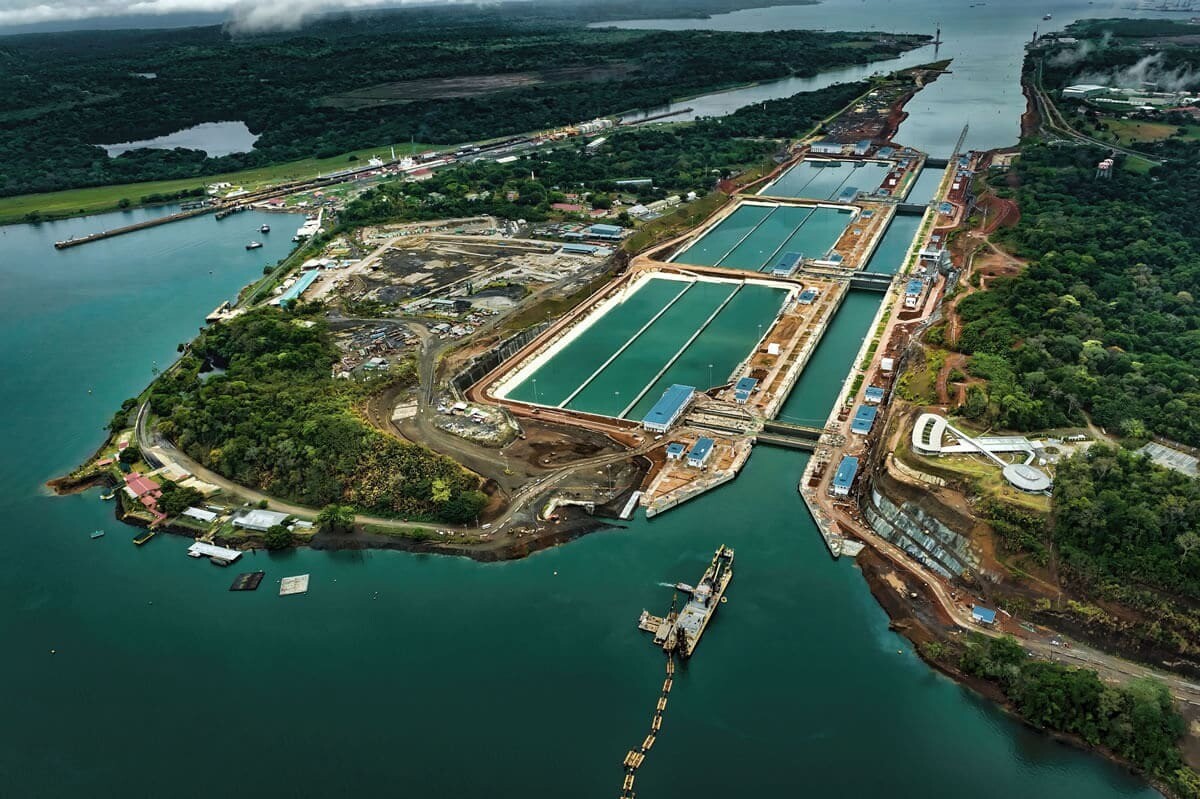
The geopolitical dispute between the United States and China for strategic control of the Panama Canal has entered a new phase, which international analysts interpret as a diplomatic victory for President Donald Trump and a significant setback for Chinese influence in one of the world's most sensitive trade corridors. This multi-billion dollar operation enables the transfer of most ports linked to the canal to Western hands, weakening the position of companies associated with Chinese interests. Trump accused the company Hutchison of following directives from Beijing, which provoked an immediate reaction from Chinese authorities, who came out to defend what they consider their strategic interests. One of the central axes of the analysis is the figure of entrepreneur Li Ka-shing, a tycoon of Chinese origin who for over 25 years controlled key ports of the Panama Canal and built a business empire with ramifications in Hong Kong, Europe, and Latin America. That disappointment, added to the pressure exerted by Trump, led to the cancellation of economic agreements with China and a shift in Panamanian foreign policy towards a closer alignment with the United States. On the domestic political front, President José Raúl Mulino faces criticism for having granted concessions in exchange for benefits considered insufficient, in a context where the Panama Canal is perceived not only as an economic asset but as a symbol of sovereignty and strategic power. For analysts, the dispute reveals a broader dynamic: the United States manages to reassert influence in a key enclave of global trade, while China loses pieces on its international maritime chessboard. The canal, vital for world logistics and for transit between the Atlantic and the Pacific, thus returns to the center of a confrontation between great powers, with Panama as the stage and an obligatory actor in a historic decision. The turning point came with the entry of BlackRock, one of the largest asset managers in the United States, which backed the acquisition of the canal's ports. While those expressions did not imply a formal process of reversing the canal's sovereignty, they did function as a political gesture that anticipated a series of maneuvers aimed at limiting Chinese presence in the region. In this framework, a recent agreement substantially altered the existing balance. For Washington, the agreement consolidates a key strategic advantage and reduces China's capacity to pressure critical trade routes. From Beijing, the reaction was one of open discontent. His trajectory, which began as a war refugee and culminated at the pinnacle of global economic power, is presented as a paradigmatic case of financial ascent. However, the margin for maneuver is limited: Hutchison is not a state-owned company and Li is a member of the Chinese Communist Party, which complicates direct intervention. The deterioration in the relationship between Panama and China also appears as a key factor. Since the Central American country joined the Belt and Road Initiative, the investments promised by Beijing turned out to be scarce and, in many cases, never materialized. The operation is not limited to Panama: it involves more than 40 ports in 23 countries, amplifying its impact on a global scale. Chinese leadership launched a propaganda offensive against Li Ka-shing, whom they accused of betraying national interests, and activated warnings directed at Chinese entrepreneurs about the need to align with the state's strategy.