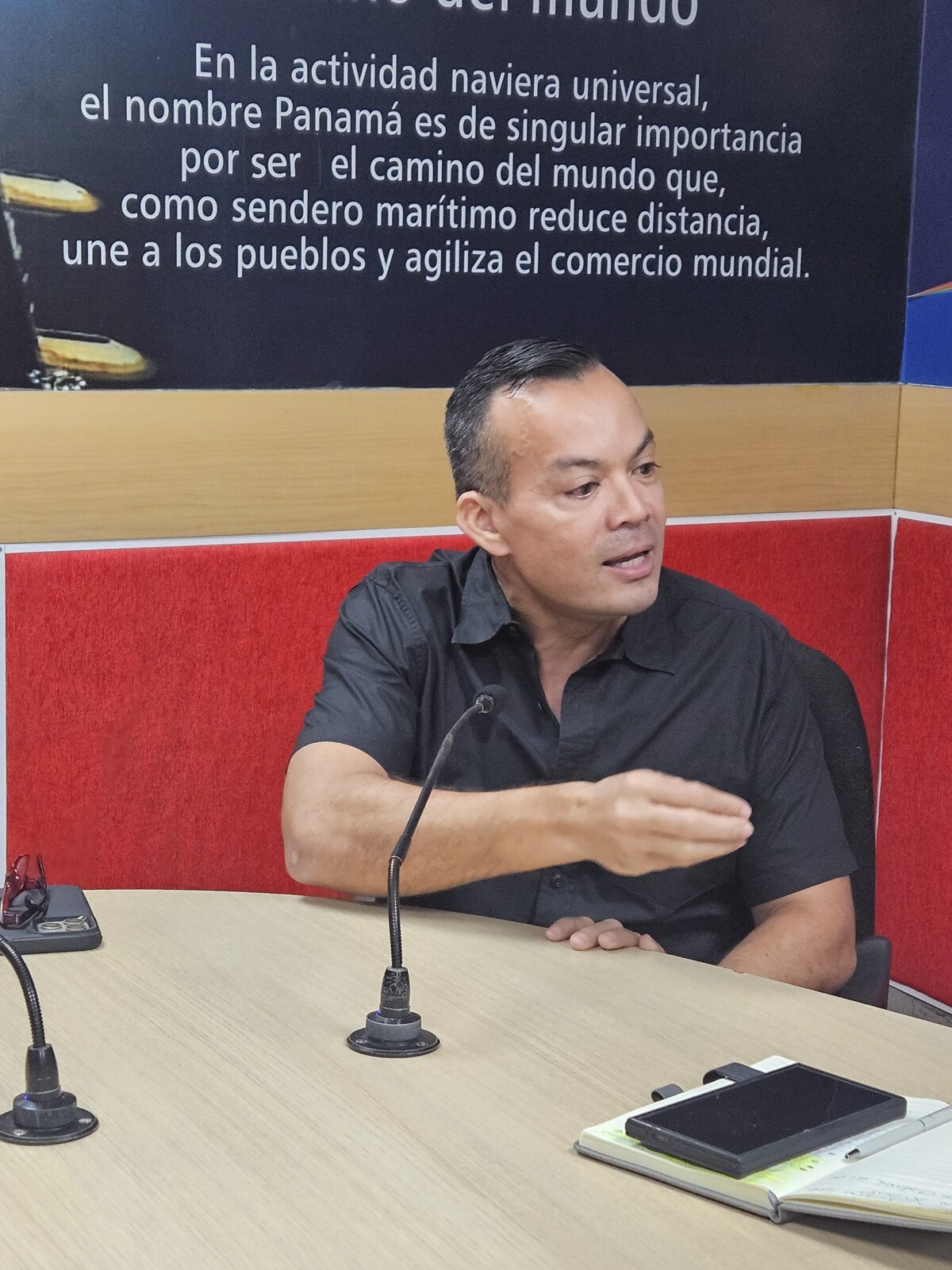
The recent ruling by the Supreme Court of Justice that declared the contract between the State and Panama Ports Company unconstitutional has sparked a strong clash of opinions in Panama's legal sphere. Some warn of a blow to the country's legal security, while others argue that the concession model must be corrected without the State renouncing its constitutional powers. Juan Carlos Araúz, former president of the National College of Lawyers, questioned whether the decision should be celebrated without a deeper analysis of its institutional, economic, and reputational consequences for Panama. Araúz doubted the reasonableness of the time it took to resolve a matter of high complexity, recalling that new magistrates took office on January 1st and, in less than 30 days, participated in a decision involving more than three decades of contractual relations. "When I have these elements, I cannot applaud a decision like this. It is not a government issue, it is an issue of State," he stated. The lawyer warned that the ruling ends up politically censuring six governments, without there being any concrete consequence for the officials who allowed, supported, or renewed the contractual relationship. "Six governments are censured, but that does not avoid the responsibility of the State," he affirmed. "This is not more legal security, it is more uncertainty," he said. He indicated that Panama projects the image of a partner that promotes investments, accompanies them for decades, and then ignores them. "It is encouraged, it is promoted, an activity is inserted into the world and then it is said: the Court ordered me to get you out. This strikes at the reputation of the Panamanian State as a strategic partner," he maintained. He recalled that this episode adds to the precedent of the mining case, reinforcing the international perception of institutional instability. In contrast, Marco Austin, president of the Panamanian Association of Constitutional Law, explained that the real reading of the ruling is not simply to tear up a contract, but to force the State to rethink the port model that has dragged on since the nineties. "The contract is from 1997 and did not comply with the legal formalities required by the Constitution. The real interpretation of the ruling is that the port model must be updated," he noted. Austin indicated that one of the State's historical errors has been to negotiate concessions passively, allowing the company to impose conditions, when constitutionally the ports belong to the Panamanian State. "Concessions cannot imply that the State renounces its administrative faculties, because the ports in Panama are of the State and cannot be transferred in a unique and exclusive way to anyone," he affirmed. He argued that once the ruling is executed, the contract is out of the legal life, and it now corresponds to the Executive to define the path: to renegotiate under new rules or to open an international bidding. "What corresponds now is for the State to act: to negotiate with a new company or to go to an international bidding, but with a constitutionally correct model," he explained. Araúz posed that the Court left unanswered a central question: whether Panama is a victim or an accomplice of an activity that the State itself accompanied for more than 30 years. "In an activity where the State was a partner, where authorizations were given every day and where every investment had government stimulus, it is very difficult to say afterwards that the State is only a victim," he explained. In his opinion, the ruling is limited to erasing the contract from legal life, but it does not analyze the chain of acts by the State that allowed the business to operate continuously. "The ruling only makes the document disappear, it does not order, it does not punish, and it does not point out responsibilities. Thus, coldly, it does not contribute," he stressed. Araúz maintained that one of the biggest impacts is the message it sends to investors. "How can we explain to a company that it can trust a contract signed today, if we just tore one up after 30 years?"