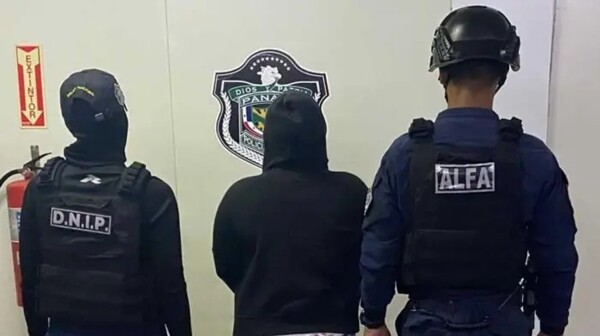
A Cuban drug trafficker imprisoned in Panama, Boris Mauricio Betancourt Hernández, has expressed gratitude to the government and people of Panama in a public letter. The handwritten missive, circulated on social networks, addresses Panamanian President José Raúl Mulino Quintero, Foreign Minister Javier Martínez-Acha Vázquez, and the entire government team. Betancourt Hernández thanks them for their "sovereign and responsible leadership" in denying the extradition request from the "Castro dictatorship." However, in his letter, he omits his ties to drug networks and the fact that two kilograms of marijuana were seized upon his arrest. His objective is to evade extradition and avoid accountability for his drug crimes in Cuba. To this end, he has fabricated a false identity as a "political dissident," claiming to have started in 2001 at the age of 15 by signing the "Varela Project." He also asserts that he was "imprisoned for years" in Cuba, a claim that is highly dubious. A source who knew Betancourt in Costa Rica stated that he arrived there in 2016 from Tampa, USA, having emigrated in 2009. Cuban judicial authorities have documented this and use it to support their extradition request. The source also linked his departure from Costa Rica to the shooting death of Cuban Jorge Rafael Rosales Bruzó, a member of his criminal network. Between 2011 and 2016, he organized the shipment of drugs to Cuba until he was detained. In prison, he befriended drug trafficker Neftalí García Testa, who introduced him to the drug business. In 2020, he was forced to leave Costa Rica and moved to Panama, where he was arrested. He also "forgot" to mention that he has been on an Interpol Red Notice since 2013 for smuggling drugs into Cuba, earning approximately $3 million. Betancourt and his circle use the old tactic of portraying themselves as "victims of political persecution."

Cuban Drug Trafficker in Panama Tries to Avoid Extradition by Posing as Political Persecutee
Cuban drug traff Boris Betancourt, serving a sentence in Panama, thanked the government in a public letter for denying his extradition to Cuba. However, an investigation revealed that his persona as a "political dissident" is a fabrication designed to evade accountability for his drug crimes.