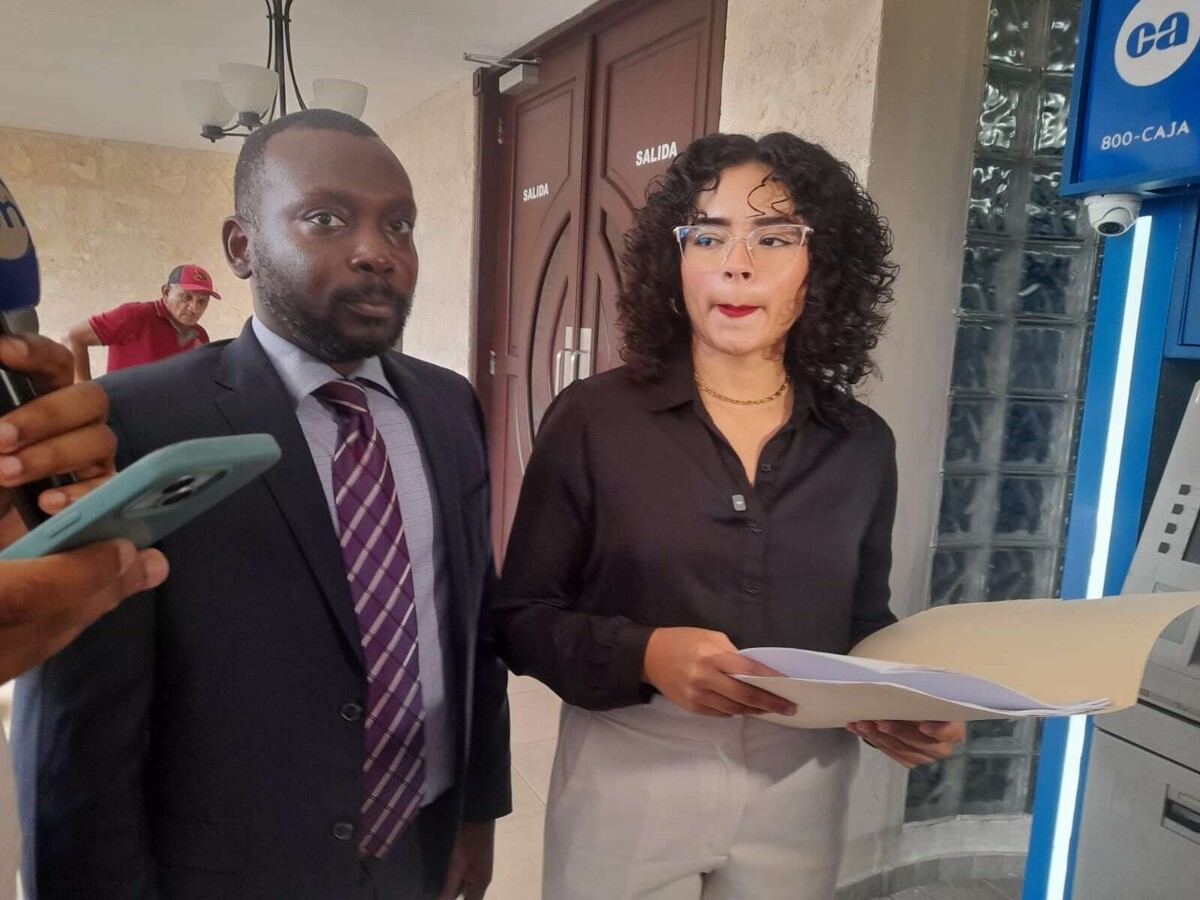
The Prosecutor's Office ruled that the decision by the Urban Cleaning Authority to take over garbage collection and billing in San Miguelito was illegal. This opinion arose in the context of a lawsuit filed by the mayor of San Miguelito, Irma Hernández, against Resolution No. 1 of January 13, 2026, issued by the AAUD's board of directors. Prosecutor Grettel Villalaz de Allen concluded that the AAUD overstepped its functions and violated legal norms and principles of municipal autonomy. The document also points out procedural irregularities. By taking over the billing, the AAUD invaded a key source of the San Miguelito Municipal Treasury, directly affecting the district's financial autonomy. The magnitude of the impact is not minor. There is also no evidence of approval from the San Miguelito Municipal Council, an essential step when local competencies and revenues are at stake. Beyond the technical debate, the main point of friction is economic. It cites a previous ruling by the Third Chamber that declared a measure affecting municipal revenues in Penonomé illegal without creating compensation mechanisms, reinforcing the idea that local resources cannot be displaced by unfounded administrative decisions. In this context, state intervention, while necessary in crises, cannot become, according to the Prosecutor's Office, a way to concentrate powers and resources. Despite the Prosecutor's opinion, the final word will belong to the Third Chamber. The Mayor's Office itself had warned that ceding the cleaning fee was not viable or legal, a stance that was reflected in official communications before the now-challenged resolution was issued. The budget approved by the San Miguelito Municipal Council for 2026 contemplated over seven million dollars in revenue from the cleaning service. Transferring that flow to the AAUD without a legal mechanism to support it compromises the municipality's operational capacity and alters its fiscal planning. The Prosecutor's Office analysis also reveals that the intervention was not an isolated or improvised act. There were previous meetings between national and municipal authorities, as well as concrete coordination proposals. The situation caused a sanitary alarm, social discontent, and political pressure, forcing the central government to intervene immediately through the AAUD. Mayor of San Miguelito, Irma Hernández, files a nullity lawsuit against the Urban Cleaning Authority. The origin of the case dates back to an evident crisis. In December 2025, the collection system collapsed due to failures by the concessionaire company Revisalud, leaving tons of garbage accumulated in the streets and communities of San Miguelito. However, the problem, the Prosecutor's Office warns, lies not in the intervention itself but in its scope. For the Prosecutor's Office, the AAUD crossed a critical line: it went from supporting the municipality to replacing it without meeting legal requirements. The Prosecutor's Office maintains that the cleaning fee constitutes a revenue of its own for the municipality, protected by Law 106 of 1973. Law 51 of 2010 establishes that the Authority can only formally take over the service when it is established in the corresponding region or when there is a clear transfer of competencies. The resolution that formalized the intervention was adopted by the AAUD's board without the participation of the district's mayor, even though the law requires her inclusion with a right to speak in decisions of this nature. The final decision ignored that approach and moved in a different direction. In its argument, the Prosecutor's Office also introduces a judicial precedent element. Among them, the possibility that the AAUD could provide temporary support without taking financial control of the service. However, those conditions were not met.