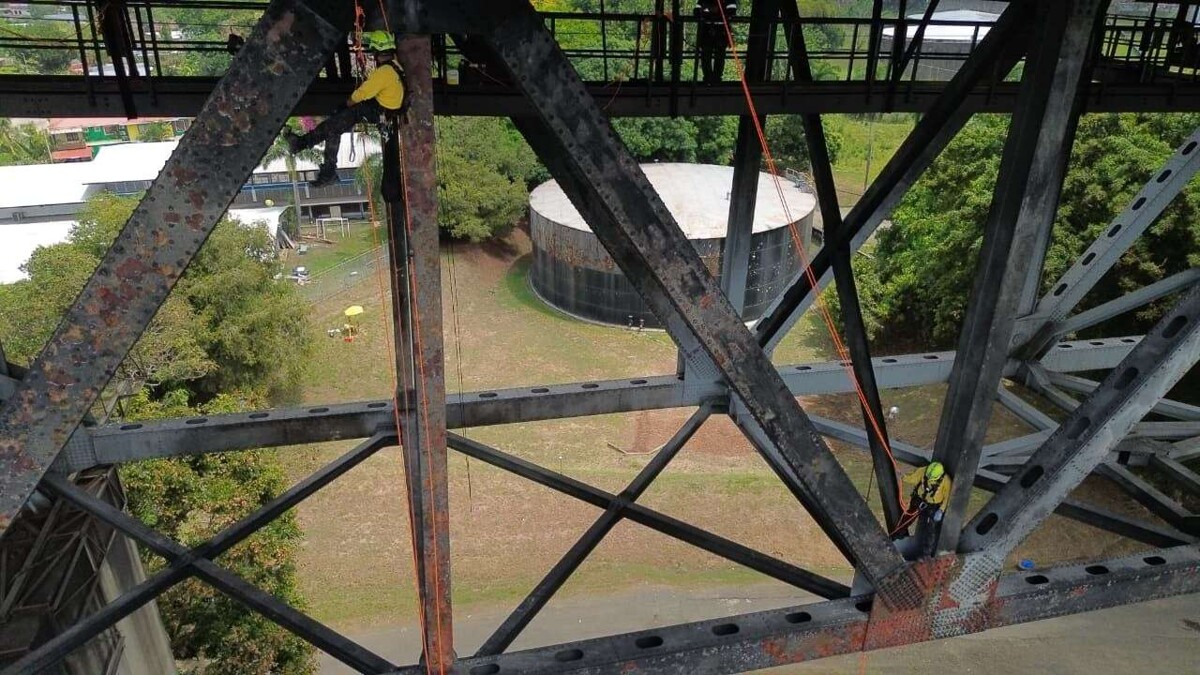
What unites Urbalia, Petaquilla Gold, and Cobre Panamá is not the poor management of the concessionaires. They are judged by timely and impartial actions and proven institutionalism, not when smoke is already covering the sky near our most important assets or when an iconic bridge that connects the Americas is affected. The author is the president of the Foundation for the Economic and Social Development of Panama. There is a revealing moment in every crisis that Panama refuses to learn from. The bill was paid by the country. Then came Cobre Panamá. In 2008, the state granted Urbalia Panamá a 15-year concession for managing the landfill. Panama has a history of concessions that ended badly—not by bad luck, but by systematic omission. And then something explodes. That is Panama's structural tragedy: not the absence of laws, but the chronic distance between the laws and their application. The concession is granted with enthusiasm, monitored with lukewarmness, and defended with silence. And the landfill continued to operate. In Donoso, the script was identical but on a larger scale. But the most uncomfortable philosophical question is not who caused the explosion, but who had the obligation to prevent it and why they did not. This is not an isolated case. The revealing moment comes later, when the authorities appear before the press and, almost unintentionally, point out what everyone should have known beforehand. The state knew it. That is the cycle. The pattern repeats regardless of the sector or the government. Let's talk about Cerro Patacón. Until something explodes and appears at a press conference, zero tolerance. After a dozen inspections in a five-year period, processes in MiAmbiente remained pending resolution. Five years. It is a society that improvises. And sadly, there are real victims: a worker charred under a bridge, communities drinking contaminated water in Donoso, a national park poisoned at the gates of the capital. A society that only monitors in crisis is not a society that governs. Two hundred thirty-two times. Not the lack of institutions, but that they are only activated when the damage is already done. And the difference between governing and improvising is not measured in speeches or decrees. In total, the operation violated environmental obligations 232 times in ten years, with damage to forests, species, and water sources. It is not the moment of the explosion, nor the image of smoke covering the Bridge of the Americas on April 6, nor the report with one fatality and two injured. Twenty months of unheeded signals. The Public Prosecutor's Office initiated an ex officio investigation to determine the causes of the incident and establish possible responsibilities. An investigation by the Public Ministry determined it could cause several types of cancer. The director of the Panama Maritime Authority reported that the Panama Oil Terminals (POTSA) facility was a concession with claims for debt, and that since July 2024, issues of security had been raised regarding that facility. The company had accumulated over a million dollars in fines for environmental non-compliance. It is something deeper: the progressive surrender of the state's supervisory role due to inertia. Before it was Petaquilla Gold, which violated more than twenty Panamanian laws before operating. The contamination impacted about 10,000 hectares around it, including the Camino de Cruces National Park. The state assumed million-dollar emergency works due to the risk of the tailings ponds overflowing. When it ceased operations in 2014, it left behind cyanide and heavy metal-contaminated waters, buildings on the verge of collapse, and scattered chemical containers. A journalistic investigation based on 29 MiAmbiente inspection reports, obtained through Transparency Law, documented that before extracting a single ton of copper in 2019, inspectors had already found 161 violations of the environmental impact study since 2014. The concession covered 132 hectares. Fine. July 2024.