Panama City, Nov 20 (EFE).- The United Nations Food and Agriculture Organization (FAO) highlights the enormous potential of fishing and aquaculture to provide abundant, high-quality food, and calls for its sustainable use in Latin America and the Caribbean, where fish and other aquatic product consumption is low.
In an interview with EFE, on the occasion of World Fishing Day on November 21, the Principal Fisheries and Aquaculture Officer and Coordinator for Better Production of the FAO for Latin America and the Caribbean, Javier Villanueva, recalls that the region has "the healthiest diet with the highest cost" in the world, "more than five dollars a day".
"And here comes the issue of how fishing, for example, and aquaculture could support" to change this situation, because "our region is also one of those that consumes the fewest fishery products" in the world, affirms the official of the United Nations Food and Agriculture Organization.
According to United Nations data, the world apparent consumption of aquatic foods is 20.7 kilograms per capita per year, while in Latin America and the Caribbean it falls to 11 kilograms, and to maintain this level by 2050 it will be necessary to increase aquatic production by at least 13%.
In Latin America and the Caribbean there is "a lot of potential" for fishing and aquaculture, which can "provide high-quality, high-nutrient foods," in a region where "in 2024 there were 34 million people suffering from hunger and 170 million with a lack of regular access to a healthy diet".
Challenges to increase consumption
Villanueva acknowledges that increasing the consumption of aquatic foods "is one of the great challenges" facing the region and involves reducing its high cost for the consumer, which requires "better policies" for the sector.
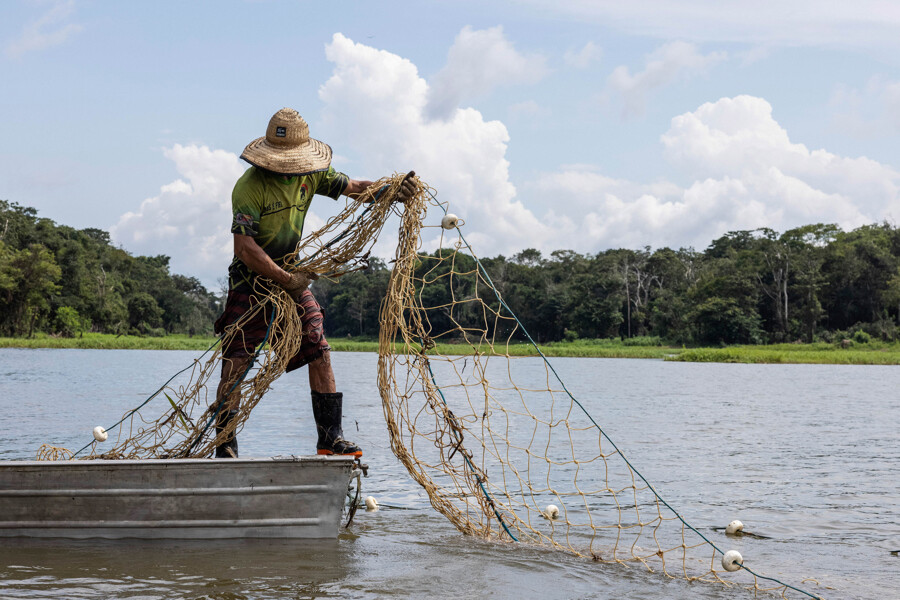
These policies must allow products, for example, from artisanal fishing, to "meet certain standards or requirements to be marketed locally".
Latin America "is generally characterized as a food-exporting region, where traditionally, products from fishing and aquaculture were sent directly to international markets. We are talking that tomorrow the population will increase by more than 150 million people, and we are going to have to find what are the tools or strategies to be able to feed the people," highlighted the FAO official.
"Today, we are having a phenomenon that, in order to leave these products in our countries, we need to pay the same price as is paid for them abroad," comments Villanueva.
Obstacles to sustainability
Sustainability is an indispensable condition in the exploitation of the sea's wealth and its nutritional use, and in this context, Villanueva emphasizes that "fishing remains the only food-producing sector that depends on the direct extraction of natural resources from the environment, which gives it additional complexity".
Hence, the main obstacle facing the sector is climate change, which is evidenced, for example, in aquaculture, in water warming, and it can also cause the death or arrival of some diseases that were not contemplated.
In fishing, climate change is causing changes in the behavior of migratory species, a situation that forces fishing management measures that are often outdated in the region.
This is why "it is necessary for fishing management and regulation measures to remain at the forefront" and to help "ensure that they are truly meeting their objective", such as preventing overfishing or illegal fishing.
"World Fishing Day is something very representative (...) because it is a time to reflect and see the importance of this sector, also for the nutrition of the world".