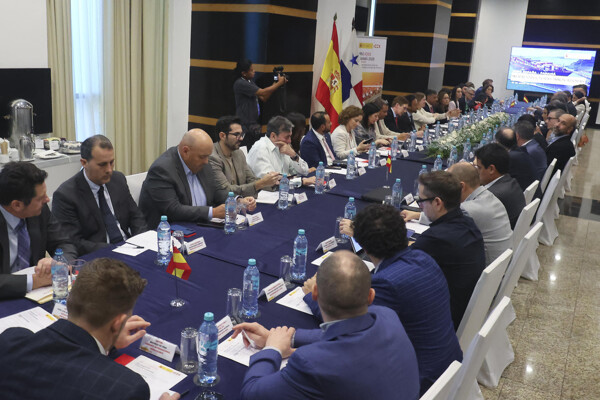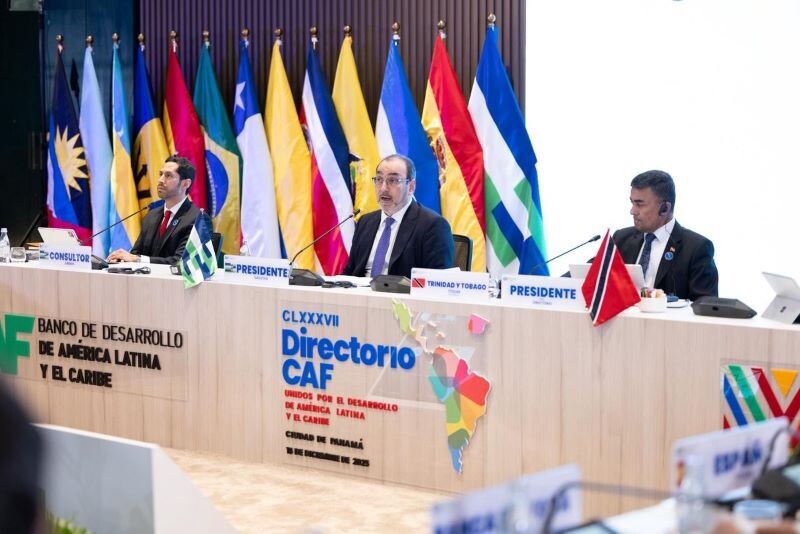
The Board of Directors of CAF, the development bank of Latin America and the Caribbean, unanimously approved the re-election of Colombian Sergio Díaz-Granados as Executive President for the period from 2026 to 2031. This decision by the shareholder countries represents a vote of confidence in the management of the Colombian, who has led a historic institutional growth with annual approvals exceeding $16 billion and equity capital of $7 billion, the highest since the organization's foundation.
Under the leadership of Sergio Díaz-Granados, the institution has experienced strategic expansion that includes the incorporation of new member countries such as El Salvador, Honduras, the Dominican Republic, Costa Rica, and Guatemala, as well as the return of Chile as a full member and the integration of Caribbean nations like Barbados, The Bahamas, and Grenada. This new mandate positions CAF as the multilateral bank with the greatest geographical presence in the region, optimizing access to financing for cross-border impact projects and strengthening economic integration.
Financially, Díaz-Granados's administration led agencies like Standard & Poor's to raise CAF's risk rating to AA+, the highest category in the organization's history. Looking ahead, the institution announced at COP30 an investment of $40 billion for the next five years, with the commitment that 50% of its total financing will be directed to sustainable projects, renewable energies, and biodiversity conservation by 2030.
Following the confirmation of his re-election, Díaz-Granados thanked the vote of confidence and stated that the priority for the next quinquennium will be to double the bank's portfolio, intensify collaboration with the private sector, and bolster regional productivity. Likewise, the influence of the Executive President was recognized internationally when he was included in TIME magazine's list of the 100 most influential people in the world in 2025.
CAF has defined a roadmap focused on climate action and sustainability. Under Díaz-Granados's presidency, the goal of achieving 40% approvals for green operations was met ahead of schedule in 2024. This global recognition reflects a sustainable business model and excellent corporate governance, factors that have allowed the mobilization of resources on favorable terms for member countries.