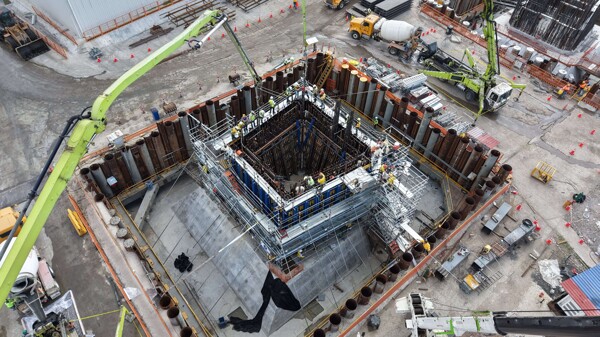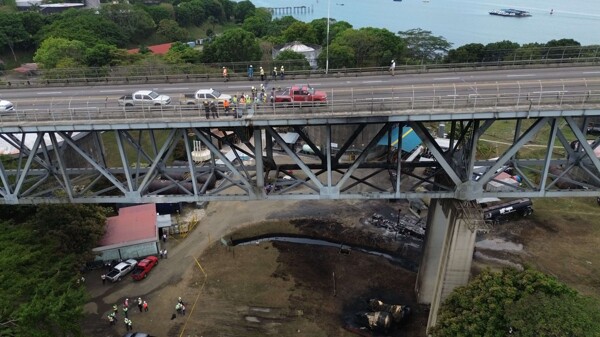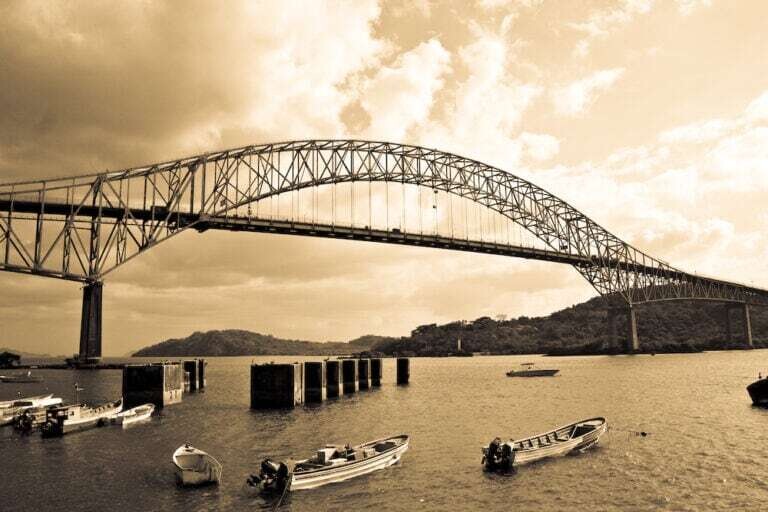
Maritime traffic could not be stopped, and the scale of the project alone represented a considerable technical challenge. With its 1,654 meters in length and 61 meters in height above the water level, the structure became, at the time, one of the longest suspension bridges in the world, according to the magazine El Faro del Canal de Panamá. Originally designed with two lanes per direction, the bridge was conceived to support about 9,500 vehicles daily. Today, more than 55,000 cross it every day, a reflection of urban growth and the strategic role it has acquired over time. The inauguration was headed by President Roberto F. Chiari and the Governor of the Canal Zone, Robert J. Fleming Jr. The event, the Canal recalled, not only marked the opening of a new route, but also a milestone in the territorial integration and land communications of the continent, facilitating transit between North and South America. More than six decades later, and with the existence of two other bridges over the Canal, the Bridge of the Americas remains much more than a structure. Thus was born one of the most emblematic engineering works of the 20th century in Panama, financed by the government of the United States, which then exercised administrative control over the Canal through the Canal Zone, a territory under its sovereignty. Photos in the hands of the Panama Canal, and published in El Faro, tell step by step how the bridge was built. Construction of the bridge began in 1959, under particularly demanding conditions. There was a time when the Panama Canal not only joined oceans, but also divided the country. It was an open wound in the 'waist' of the continent, a strip imposed by the hand of man that forced Panama—and, in a way, all of America—to contemplate itself from a distance. That reality began to transform on October 12, 1962. A promise of connection that, over the years, some consider unfulfilled or forgotten. But the story of that change dates back to 1914. The inauguration of the Canal, conceived to shorten distances in the world, had the opposite effect at the local level: it split the country in two and posed a daily challenge. Crossing from one side to the other was not easy. On that day, steel ceased to be a structure to become a bridge, and the bridge, a promise. It is a symbol of connection, a challenge overcome, and a promise that still invites to be revisited. For decades, the only alternative were ferries operating in the locks, a limited system that complicated the transit of people and goods. The need for a permanent passage became evident.