This program, aimed at children aged 8 to 12, has become a benchmark regional initiative to foster STEM vocations in early education, capturing the academic interest of observers from Costa Rica, Paraguay, and Argentina.
National Reach and Diverse Participation The project, carried out in collaboration with the Faculty of Computer Science, Electronics, and Communication of the University of Panama, reached a total of 221 participants, exceeding the 198 registered in 2025.
Panamanian Project 'Divirtámonos Programando' Attracts Latin American Interest to Promote STEM Careers The fifth edition of the 'Veranito Feliz' event, focused on children aged 8 to 12, successfully integrated children from all provinces and regions of Panama in a virtual format. To validate the quality, over 15 national and international observers were invited to evaluate the performance of the groups and the technical mastery of the mentors using rubrics.
Engineer Marlen Gómez, project coordinator, highlighted that the main objective is "to create an environment where children can get to know the world of programming in a fun and accessible way."
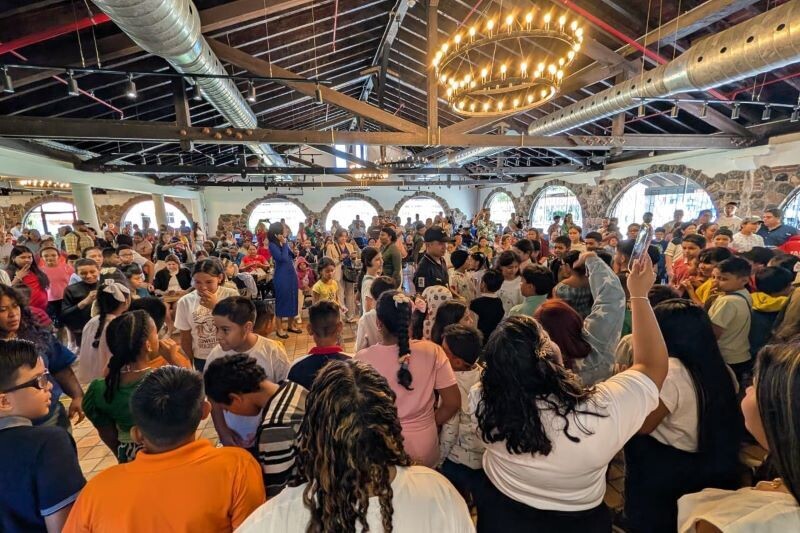
The closing ceremony took place on January 22 at the Ciudad del Saber.
Dr. Ernesto Ibarra, president of IEEE Panama, emphasized that these activities allow new generations to discover the various alternatives in technological areas, contributing to the training of talent that will drive the country's development.
The territorial representation included students from all over the country: Panama (138), Panama West (61), Colón (4), Chiriquí (5), Veraguas (4), Coclé (3), Darién (1), Herrera (2), Los Santos (1), Bocas del Toro (1), and Indigenous Regions (1).
Regarding the demographics of the registrants, 40% were girls and 60% boys, of which 50% were new members of the program.
It was also highlighted the integration of students from both private schools (45%) and official centers (55%), represented by institutions such as the Centro Educativo Bilingüe Nicolle Garay, the Colegio Adventista Metropolitano, and the Centro Educativo Bilingüe María Latorre, among others.
Methodology and International Validation The academic structure of the program consisted of four levels of depth developed over three weeks in a virtual format.
University students acted as mentors to guide children in programming, critical thinking, and the application of the scientific research cycle.
Donna Roper, General Coordinator, highlighted that the inputs provided by foreign specialists are vital to continue advancing after the local success.