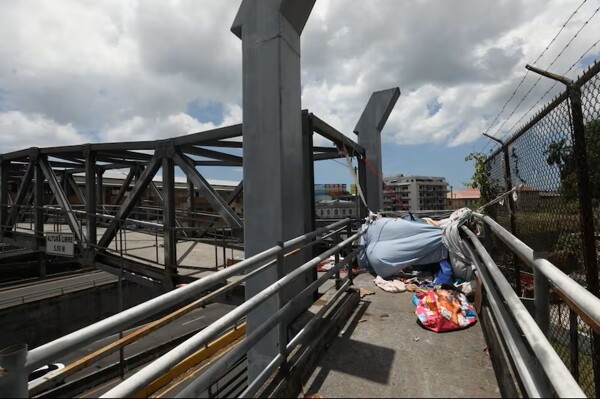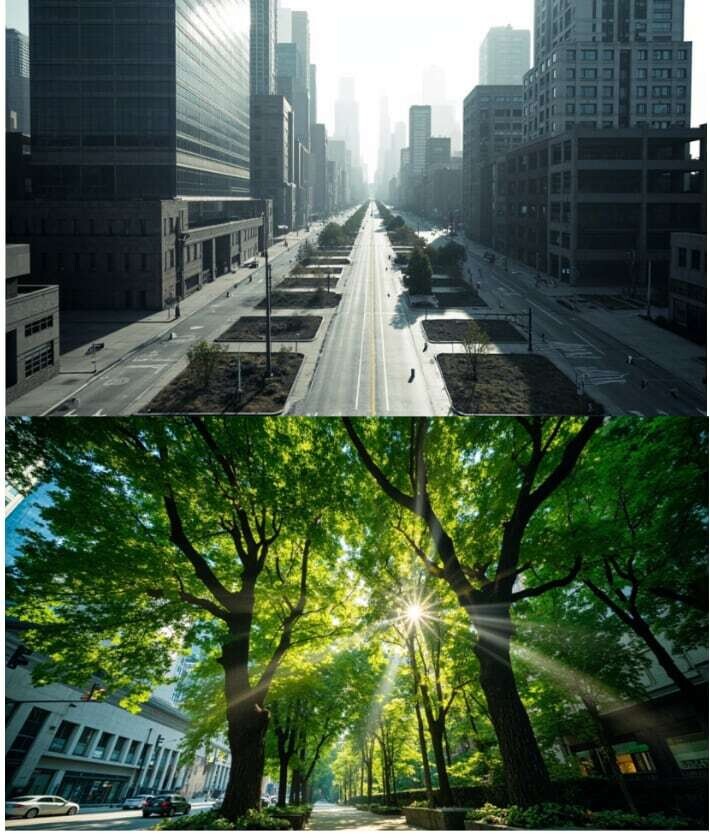
In contrast, a city that prioritizes pavement and structures contributes to its own deterioration. The response begins with greater empathy for the city we inhabit, with the commitment of professionals to care for the conservation of those corners where the landscape is part of history, and with an education that fosters respect for the environment, from the youngest generations to adults. Recognizing, valuing, and integrating the landscape into daily decisions is undoubtedly an essential step to ensure that this wall-less heritage continues to be part of our identity. The author is an architect and a student in the Master's in Landscape Architecture and Environmental Management at the University of Panama.
However, the landscape is not usually interpreted directly as heritage, but rather as another component of the environment. In this sense, the landscape not only fulfills an aesthetic function but also a vital one. The presence of green areas directly affects air quality by contributing to the reduction of pollutants; it helps regulate urban temperature, decreasing the heat island effect; and it provides significant health benefits.
This environment, in turn, is linked to structures, concrete, streets, and sidewalks, relegating the landscape to a secondary role, as if it were a complementary element and not an essential part. In this process, it loses the leading role it should have in the construction of territorial identity. But one might ask what else the landscape can offer, beyond its appearance.
Nevertheless, these spaces continue to be underestimated in urban planning. The Calidonia district is a clear example of how, more than a century ago, the landscape was conceived as an integral part of urban design. The composition of the La Exposición neighborhood evidences harmonious planning, where architecture was integrated with the natural environment.
A city without a landscape is a sick city. The landscape is an essential part of the urban environment, and although progress implies transformations, not everything should be eliminated to make way for the new. It is not about ephemeral or immediate elements, but about living systems that develop gradually. Therefore, when intervening in the landscape, it is essential to revalue and integrate it, beyond indiscriminately replacing it. How can we contribute to ensuring that this landscape is not lost or becomes invisible to our eyes?