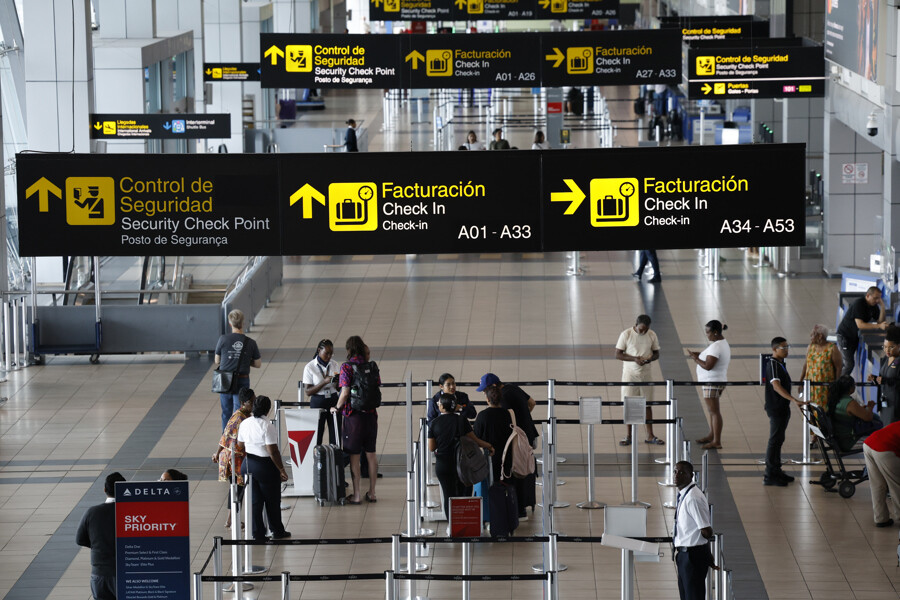
A hearing in Panama is underway against 60 individuals accused of a major drug trafficking network. The main charges are conspiracy and international drug trafficking. One of the accused has been placed under house arrest with permission to leave three days a week for kidney treatments. After the prosecution finished presenting charges against the last of the 60 defendants, the process will move to the stage where each defendant's lawyers will make their statements. In the courtroom, it is anticipated that the proceedings could be extended, as some lawyers represent only one client, while others handle two, five, or even thirteen defendants, which requires flexibility in the initially allocated times. The primary accusations are conspiracy and international drug trafficking. The prosecution points to a structure that transformed internal areas of the country's main airport into a corridor for sending cocaine abroad with the complicity of operational staff, security agents, and even actors with logistical capabilities outside the terminal. The hearing will continue in the coming hours, with a case file that promises to reveal even more about the operation that turned Tocumen Airport into a critical point in international drug trafficking. One of the key cases involved Luis Abel De Gracia, a 26-year-old employee of an airport support company. The prosecution explained that this young man admitted to belonging to the network and participating in the changing of luggage tags, a key maneuver that allowed substituting a passenger's original tag with one on a suitcase loaded with drugs. De Gracia is directly linked to a suitcase carrying 20 packages of cocaine. The prosecution illustrated how the suspects moved on internal transport tractors, pulling carts loaded with passenger luggage between Terminal 2 and Terminal 1. During this internal transit, away from general view, they exchanged the contaminated suitcases, hiding them among the regular volume of luggage before taking them to the scanner area or loading belts with the help of other infiltrated employees. Another case highlighted was that of Cristian Caballero, also 26, an employee of a company providing services to the airport. He is credited with managing a suitcase that arrived at Barajas Airport in Spain with 23 packages of suspected cocaine. Caballero was the one who received and transported luggage entering the country, giving him direct access to vulnerable points where contaminated suitcases were handled. Security agents and warehouse personnel were also part of the network. The prosecution also brought to the stand the participation of Luz Marilyn Velázquez, one of the three women implicated and a private security agent within the airport. Her job was to receive and place suitcases to pass them through the scanner, a function that guaranteed the continuity and success of the process, as the group needed internal eyes and hands at every stage of luggage handling. The investigation also revealed that some suitcases entered through the green area of the airport, where warehouses of several companies operate. Other collaborators were detected there who, according to the prosecution, facilitated the movement of contaminated luggage before they were transported to the documentation areas and subsequent loading onto commercial flights. The common thread of the entire operation, according to the Public Ministry, was Luis Ortega, identified as the alleged leader. Intercepted communications show how he coordinated the entry, concealment, and movement of the suitcases, giving precise instructions to those participating in each link. A parallel hearing: the son of a magistrate enters the scene. During the judicial session, Christopher Cedalice was brought to the dock, a name that caused a strong political and judicial stir as he is the son of Supreme Court Justice Cecilio Cedalice. The prosecution maintains that Christopher did not operate at Tocumen, but his role was in external logistics, specifically in picking up the drugs that entered through the Panamanian coasts to then hand them over to the group that would transport them to the airport terminal. When the arrest warrant was issued, authorities did not find him at his residence; it was later determined that he was hospitalized due to being a dialysis patient.