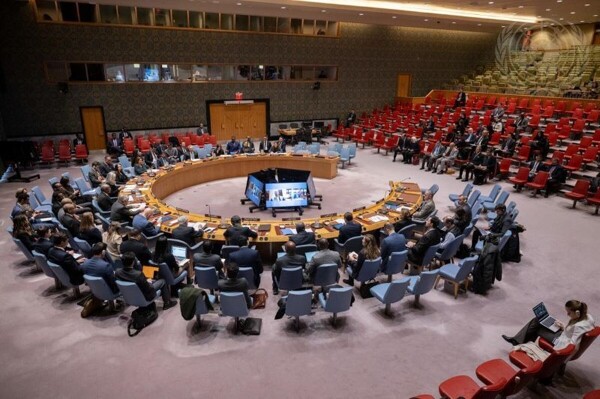
The Executive Secretary of the UNCCD, Yasmine Fouad, emphasized at the opening the 'urgency of acting on soil degradation', which is alarmingly advancing across the planet. She recalled that 'this week will be decisive for examining the progress of the commitments adopted at COP16', held in Riyadh in 2024, and for defining the roadmap for the Convention beyond 2030. Fouad also stressed that the central purpose of the meeting is 'to measure progress and identify shortcomings to accelerate solutions' that allow for advancing the protection of land resources. 'Investing in sustainable land management, land restoration, and nature-based solutions is not only an environmental necessity but an imperative for development and a strategic investment in stability, prosperity, and peace,' stated the former Egyptian Minister of Environment. The work program of CRIC23 includes thematic sessions on land tenure as a basis for driving investments in healthy ecosystems, the increase in sand and dust storms, and the second meeting of the gender group, aimed at highlighting the disproportionate impact of degradation and drought on women. Panama hosts the United Nations Convention to Combat Desertification (UNCCD), the 23rd session of the Committee to Review the Implementation of the Convention (CRIC23), where emphasis was placed on the global loss of fertile land and the increase in droughts. This situation is compounded by the projection that, if current trends do not change, by 2050, 16 million square kilometers of land could be degraded, an area almost equivalent to South America. In Panama, the lack of rainfall has already several times reduced transit through the Canal, with direct repercussions for world trade. The parties will also work with youth, indigenous peoples, women, and local communities, and will attend the presentation of reports on small island developing states and grasslands. Fouad added that during her tenure as head of the Convention, she has been 'a witness to how healthy land and water are the basis of food and society'. According to UNCCD data, the meeting takes place in a context that experts describe as critical: two-thirds of the planet have become permanently drier in the last three decades, and in the last two years, the most extensive and damaging droughts in history have been recorded.

UN Session on Combating Land Degradation Kicks Off in Panama
The 23rd session of the UN Committee to Combat Desertification (CRIC23) has begun in Panama. Participants will discuss progress on commitments, assess land protection measures, and develop a post-2030 action plan. The UN reports that two-thirds of the planet have become permanently drier.