With a call to prioritize the recovery of collective memory, a broad debate was held at the University of Panama on the causes and effects of the United States invasion of this country, which began on December 20, 1989.
The president of the Bayano Political Studies Foundation, Edgardo Reyes, emphasized the need to recover and examine the history of a grave interventionist event that marked the life of the Panamanian people and injured national sovereignty, with a high loss of human lives. Reyes insisted on the need to understand the international impact of the invasion unleashed by the United States, which sought to create a unipolar world and a global hegemonic force to subdue other nations through force.
Master Jones Cooper, during a reflection on sovereignty. In turn, the deputy director of the Panama Canal Institute and International Studies, Jones Cooper, emphasized that in 1989 Panama was the object of a perverse psychological war and disinformation, similar to that today applied by Washington against Venezuela and its population. Cooper denounced the betrayal and cowardice of many officers of the Panama Defense Forces, who surrendered without fighting against the U.S. occupation forces and collaborated with the occupation troops to pursue the fighters who resisted and defended the territory under unequal conditions.
"The 1989 invasion violated the basic principles of International Law and the Torrijos-Carter Canal Treaties, signed on September 7, 1977, by the United States and Panama," indicated the university professor in his message to the audience, in which he advocated for the knowledge of historical truth.
University political leader Omar Sandino Concepción, in turn, highlighted the active and patriotic role of youth as protagonists in the national liberation struggle, in the feats of decolonization, and in the construction of the bases of human and social development in Panama. Concepción demanded respect and honor for those who fell in the invasion, whose remains were thrown into clandestine common graves, which remain closed due to the pressures of those who perpetrated the massacre and attempted to snatch the Panama Canal and the riparian areas from the Panamanians.
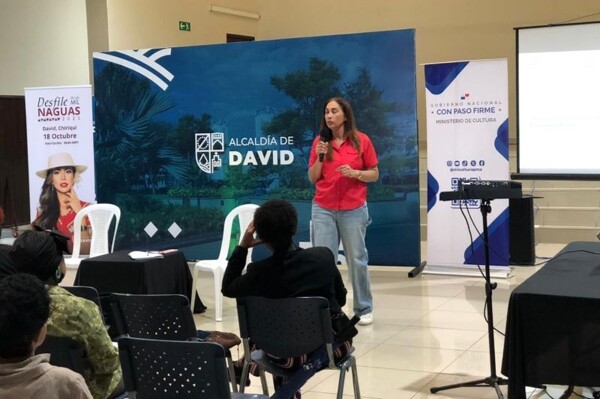
Participants in the commemorative act of the invasion of Panama. Other speakers at the event advocated for the defense of full national sovereignty, against the plundering and capitulation of powerful economic groups that seek to plunder Panama's rich and vast heritage.
A fraternal encounter between several generations. A broad colloquium on the impact of the United States' military invasion of Panamanian territory in 1989 will be held at the Manuel E. Amador Gallery of the University of Panama on Thursday, December 11, at 5:00 p.m., in an act of reflection and sovereign reaffirmation. The event has been conceived as a high-level academic initiative to bolster national identity, recover history, and strengthen critical thinking in the Panamanian population in the face of new global challenges and threats.