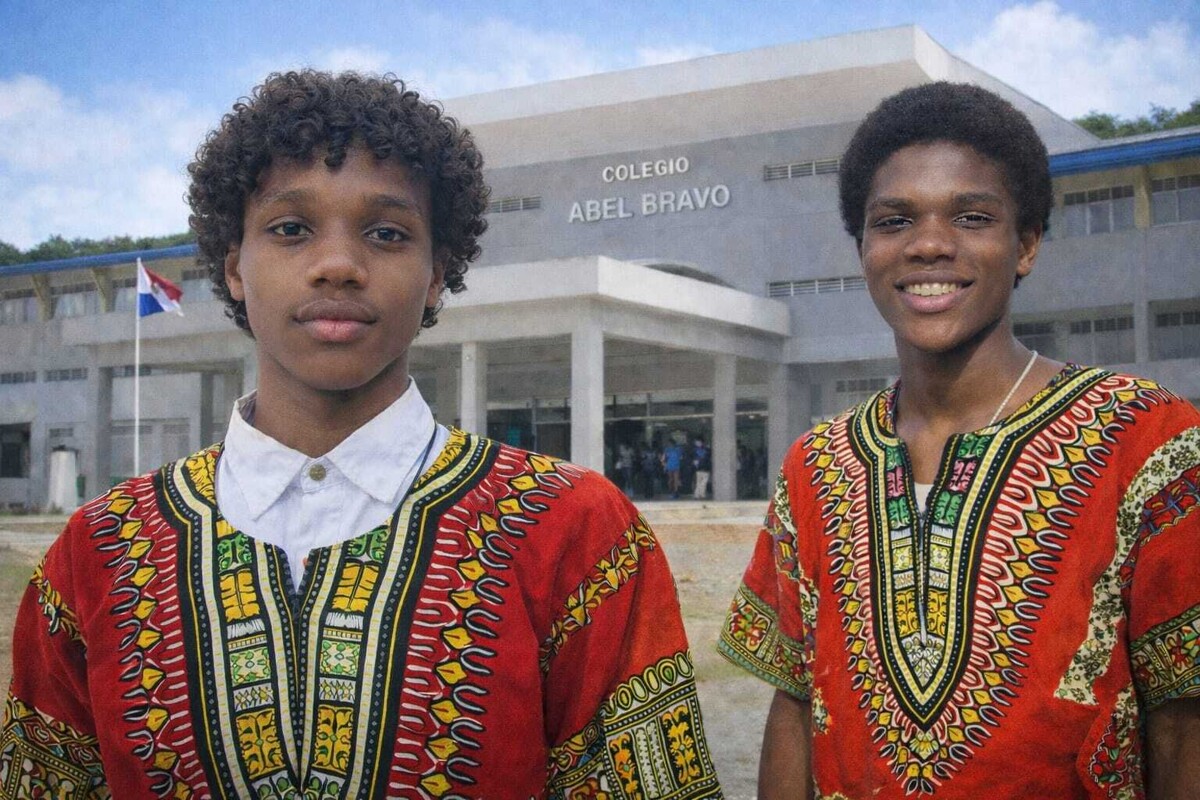
“The school is nobody’s house, it is a public institution governed by law,” emphasized the jurist. This case came to light after a complaint published by La Verdad Panamá, in which students reported that they were being prevented from attending under equal conditions due to their afro and curly hair. The students had been pressured to modify their physical appearance, otherwise they would have to take their classes in regular clothes because their appearance was tarnishing the name of the Abel Bravo school. The situation generated reactions within the institution itself and sparked a debate about discriminatory practices and outdated school regulations in public educational centers. Afro-descendant students from the Abel Bravo school win the first battle and are admitted to the campus. Kelvin Pinilla and Maykel Góndola, whose case had been denounced by La Verdad Panamá, finally managed to enroll at the Abel Bravo school, which their defense qualifies as a first victory against alleged acts of discrimination. Enrollment amid contradictions Lawyer Chalimar de Cortéz, representative of both young men, confirmed that the students' enrollment was finalized after a series of irregularities and contradictions on the part of the school administration. In Kelvin Pinilla's case, the process was carried out without major obstacles, even though the enrollment form was not signed. However, Maykel Góndola was initially denied enrollment on the same grounds, which the defense described as unequal treatment. It was not until this Monday, with the intervention of the SENADAP sub-director and the presence of the lawyer, that Góndola's enrollment was formalized, who did not even appear on the list of his group. According to De Cortéz, the guardians were instructed not to sign the forms due to conditions imposed by the school's administration, including the commitment to send the students in regular clothes instead of the uniform. However, during the meeting with administrators and teachers from the discipline committee, the director denied having established such conditions, which revealed contradictions in the handling of the case. Finally, no formal restriction was established, so the students will attend classes in the Abel Bravo school uniform, “because nothing prevents them,” stated the jurist. Regulations in the spotlight Despite this progress, the lawyer warned that there is no written agreement guaranteeing respect for the students' rights, which leaves the possibility of new conflicts open. The defense also questioned the non-compliance with Resolution 887-AL of 2023, which required educational centers to update their internal regulations, pointing out that the school maintains outdated norms. She even indicated that the director herself stated that the school's regulation dates from 1942, which she described as an “archaic” approach to current regulations. De Cortéz maintained that the situations reported could constitute violations of the students' right to education and identity, and warned that the facts have been recorded since June 2025. She also warned about the emotional impact these episodes generate in minors, stating that the damage from stigmatization is not easy to reverse. Warnings and legal monitoring The lawyer assured that she will remain vigilant throughout the school year and did not rule out legal actions if the alleged violations continue, including complaints for child abuse. The meeting was attended by school authorities, teachers, SENADAP representatives, the students' mothers, and the lawyer for the affected parties. However, the absence of officials from the Ministry of Education and the Ombudsman, who had been previously summoned, was noteworthy. “The discussion here is not about personal criteria. There is a legal norm that protects these students.”