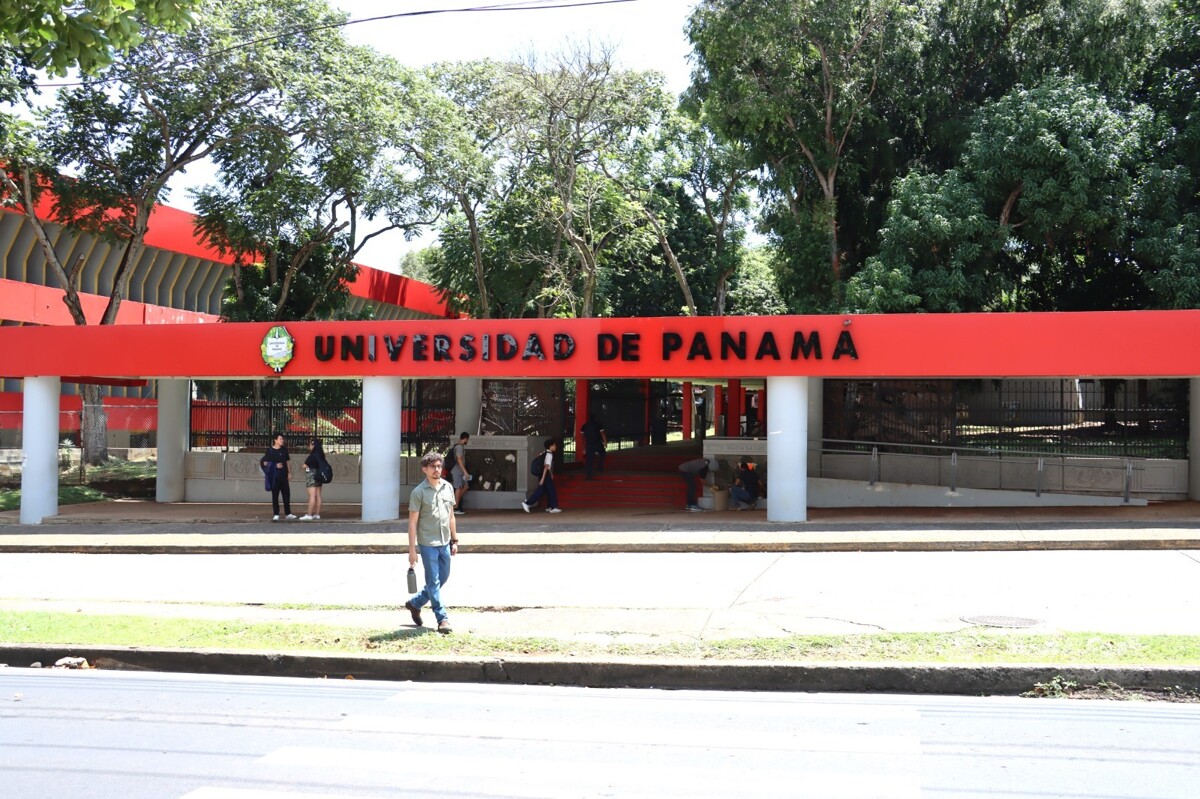
The University of Panama, through its Academic Council, has issued a “call for world peace and nuclear disarmament,” warning of the growing risks of armed conflicts and the proliferation of weapons of mass destruction, while reaffirming multilateralism as the path to ensuring global stability. In a statement approved by the Academic Council, the authorities emphasize that peace “is not an abstract aspiration, but a fundamental right of peoples” in an international context marked by geopolitical tensions, humanitarian crises, and threats to global security. The university made a direct call to the international community to strengthen mechanisms for dialogue, mediation, and preventive diplomacy, warning that the weakening of the multilateral system paves the way for arbitrariness and confrontation between states. Beyond its institutional stance, the University of Panama also plays an active role in international security. On its central campus, the RN50 radionuclide station operates, a key scientific facility within the global monitoring system of the Comprehensive Nuclear-Test-Ban Treaty (CTBT). This station is part of the International Monitoring System (IMS), a network of over 300 facilities worldwide that monitor possible nuclear tests by detecting radioactive particles and gases in the atmosphere. Panama, which signed the treaty in 1996 and ratified it in 1999, committed to contributing to this international verification system. In the country, the station operates continuously under the responsibility of the university's Department of Physics. The existence of this station in Panamanian territory positions the country as a strategic actor in Central America and the Caribbean in nuclear non-proliferation, a responsibility that takes on greater relevance in a context of increasing international uncertainty. In addition to its function in global security, the RN50 station represents a platform for scientific development, opening up research opportunities in areas such as physics, environmental radiation, and atmospheric monitoring. In its statement, the University of Panama was emphatic in stating that nuclear weapons constitute an “existential threat to humanity,” and reiterated its support for initiatives aimed at their total elimination. It also reaffirmed the principles of the Treaty of Tlatelolco, which establishes Latin America and the Caribbean as a nuclear-weapon-free zone, and highlighted Panama's tradition of promoting peace, recalling the permanent neutrality of the Panama Canal as a contribution to global stability. The Academic Council also reiterated the institution's commitment to ethical leadership, scientific diplomacy, and the promotion of a culture of peace from the academy.