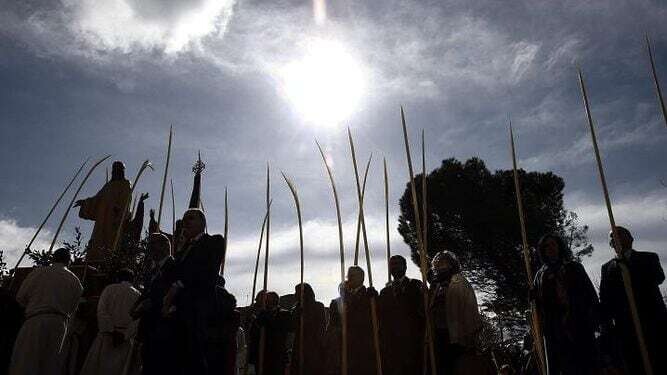
He who jumps the queue, who looks for a lever to avoid merit, or who turns a blind eye when theft occurs in his office, is forging the nails with which we later crucify the nation's future. The floats return to the temples. In Panama, we carry crosses all year round. It carries the father who wakes up early to sell on the street because the formal market closed its door to him due to his age; the single mother who stretches her paycheck until it breaks; and the young man who sees how a few share the spoils of the State while his hope fades. Watching the processions creates a lump in the throat, but when we return to our routine, the fervor dissolves. The floats advance heavily. If that old cross teaches us that sacrifice can transform reality, it is time for the Panamanian to carry his part with responsibility and help with that of the other. Right now. Otherwise, we will continue to collect photos of processions while keeping the country nailed to the same old cross. It will change if each one decides that their faith must inform their work ethic and their citizen demand. This year, when you see the floats pass in the processions, don't just look at the wood. - A Panamanian observes the processions in the Casco Viejo and wonders: what is the use of the rite if on Monday we return to the same stagnant country? - Every Holy Friday, the streets of Casco Viejo fill up. In Los Santos, fervor is even higher. This will not change just because Holy Week has passed. The candles tremble to the rhythm of the drums. And that, frankly, is a social sin that we can no longer afford. The author is a communicator and businessman. And the country wakes up exactly the same. And inequality keeps us in an abyss: 5% urban poverty, compared to a heartbreaking 76% in our indigenous regions. The crosses have a real weight. Look at the faces around you. And look at yourself. Thousands of visitors turn these days into a spectacle of faith and tradition that is part of our identity. One stops in the middle of the crowd and the same uncomfortable question strikes again. Thousands of people watch in silence or with restrained emotion. For whoever desires to live in perfection has no need to do anything else but despise what Christ despised on the cross and to desire what Christ desired there.” If we apply this maxim to our current crisis, the message is direct: that “despising what Christ despised” is not a mystical abstraction, it is the frontal rejection of the ambition that inflates the public debt and the indifference that allows for medicines to be missing in hospitals. Almost half of the employed (47.1%) survive in informality. Thomas Aquinas explained it clearly: “The passion of Christ is enough to totally inform our life. We cannot demand transparency at the top if we celebrate cheating at the base. The official numbers say that Panama is growing, but that growth has a bottleneck. Unemployment is at 10.4%, according to INEC (September 2025), with more than 227,000 Panamanians without sustenance. Corruption remains stuck at a poor 33 points on the 2025 Corruption Perception Index. “Desiring what Christ desired” is to seek a common good that today seems to be held hostage by particular interests. For Panama to resurrect, we must understand that “viveza criolla” is not an innocent prank or a likable trait of our culture; it is the DNA of corruption. It is urgent to generate formal jobs that provide stability and dignity, not just subsidies that buy silence. Now.