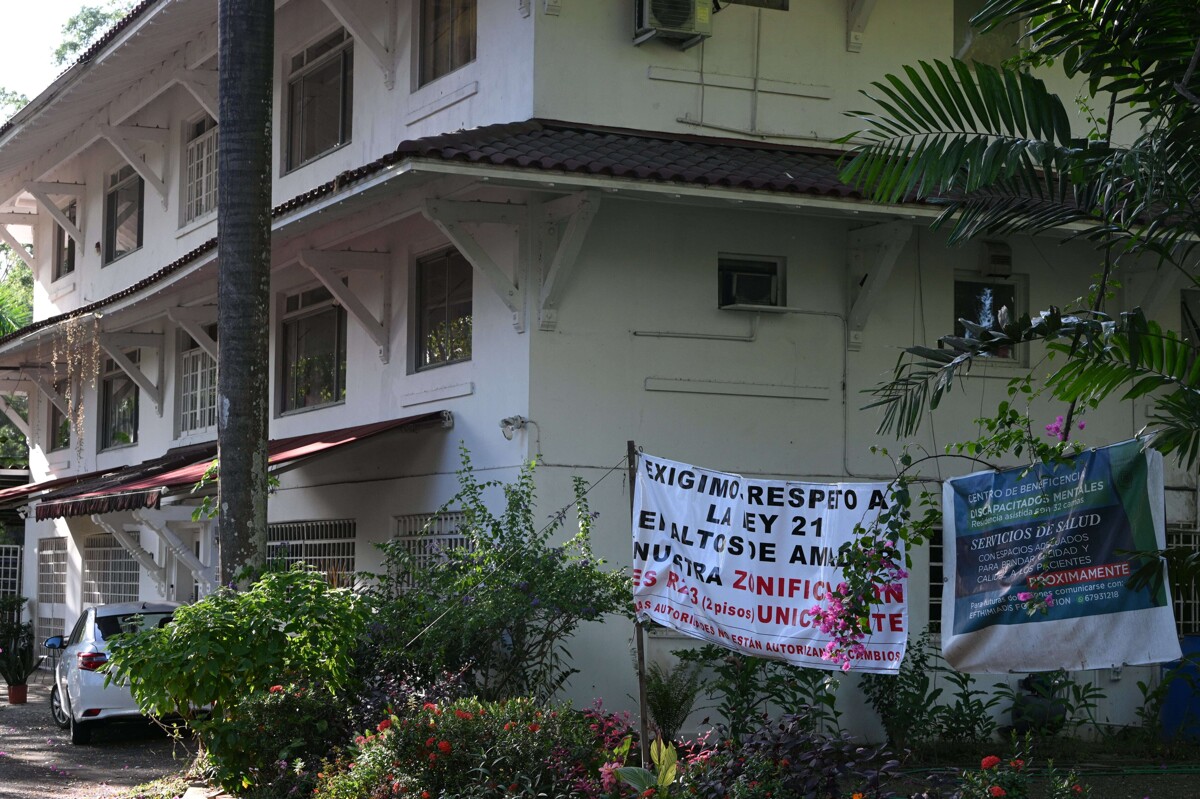
When the public debate focuses only on the Canal and the ports, the historical and environmental heritage is left undefended. That family on a Sunday probably doesn't know that the project behind their chairs violated zoning regulations, exceeded permitted heights, and felled century-old trees. It is also the responsibility of citizens. We still have time to clearly define how we, Panamanians, want to stand on that territory that cost us so much to recover. The author is an architect and president of the Amador Neighbors Association. Perhaps, as urbanist Álvaro Uribe says, we appropriated the idea of reconquering this area, but we never defined what we wanted it to mean once it was ours. The fear that these lands would end up becoming what they could be if the bulldozers advance—a kind of Punta Pacífica, a high-density model with projects that raze trees and erase history—motivated the creation of Law 21 of 1997 to protect the territory, its historical heritage, and its landscape. Since then, the rules are clear: arbitrary zoning changes are not permitted, and no ministerial decree can authorize them. Rarely is this explained clearly because institutions do not monitor and because the debate on the Canal Zone remains—26 years later—a conversation for elites and investors. If it took us almost a hundred years to recover the Canal Zone, we cannot take another hundred years to decide what to do with it. It is ironic: the generation that inherited the most important diplomatic victory in Panamanian history is also the one that squanders the sovereign territory most quickly. In Amador, apartments have been sold on concessioned lands, an operation that the Supreme Court of Justice declared unconstitutional in 2013, considering it a 'simulated alienation of public property'. Further back, the bare landscape of a hectare recently cleared by the Passage project, which is sold on social media as 'a beautiful escape to nature'. This is an increasingly common scenario in the former Canal Zone, a territory with exceptional urban design examples that in recent years has been dismantled with each new intervention. This column was produced in the 'Pensar Panamá/ Narrar la Democracia' Writing Program, by Concolón and the British Embassy in Panama. We have laws that protect century-old trees and urban forests, but any developer can get a felling permit by paying five dollars per felled tree. But speculative investment found an outlet, and now rental towers disguised as tourist accommodation are being built. Does this not become a privatization of access to the most important monument of our sovereignty? The problem is not public management, but poor public management. However, the Administrative Unit of Reverted Assets—the entity that replaced the ARI for the management of the former Zone in 2006—went from being a protector of heritage to operating with a real estate agency logic. The Canal, Ciudad del Saber, Panamá Pacífico, and the Biomuseo demonstrate this. Despite the complaints from neighbors about irregularities linked to these provisions, the authorities are like the Spider-Man meme: they limit themselves to transferring responsibility between entities. ONE: If the one who guards the heritage promotes it, there is a conflict of interest. The evidence is clear: when the State maintains control and negotiates well, the results are superior. And would it not represent a security risk for, for example, a large international fund like BlackRock to buy a wall of apartments in front of that strategic point? THREE: The Panamanian's life is not only about the Canal. We talk about sovereignty when discussing ports or Canal tolls, but we remain silent while the recovered heritage is destroyed. Exercising our sovereignty is not a task exclusive to politicians or investors. It is 11:00 in the morning, and after a journey of almost an hour, one of the hundreds of families visiting Amador parks their car at the entrance to the Canal promenade. Behind them, a giant crane looms behind a fence covered with images reminiscent of a secluded Mediterranean landscape: it is the construction of the Cavarosa project, a 15-story tower among small buildings of less than two stories. But in practice, some developers have learned three key lessons to bypass this legal shield. ONE: Without political will, norms do not exist. In Amador, there are consistent norms: buildings with 2-3 floors, except for exceptions on a couple of lots that allow 8 (Res. 139-2000 and 402-2007 of the MIVI); conserving one-third of the existing tree cover (Res. 139-2000); and building only on half of the lot (Res. 139-2000). But in practice, some developers have learned three key lessons to bypass this legal shield. ONE: Without political will, norms do not exist.