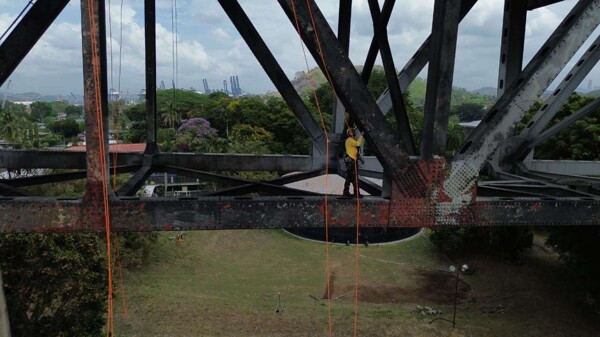
In the words of De Sanctis, the goal is to move towards 'articulated responses between institutions' and leave behind isolated actions. Another key point is the need to anticipate crises. 'We cannot keep reacting, we have to anticipate,' warned the president of APEDE, insisting on the importance of having defined plans and protocols before an emergency occurs. The incident on the Bridge of the Americas reflected the efforts of various entities, but also evidenced the lack of a previously established protocol. 'This causes delays, uncertainty, and a greater impact on citizens,' she pointed out, making it clear that the lack of coordination worsens the consequences. Finally, APEDE reiterated that this proposal responds to a real need of the country. 'It is an important step towards a more orderly, technical, and predictable model,' concluded De Sanctis, emphasizing that better preparation is not an option, but a responsibility to Panama. As warned by Giulia De Sanctis, president of the Panamanian Association of Business Executives (APEDE): 'What happened on the Bridge of the Americas, besides a lamentable event, was a wake-up call,' said De Sanctis. Panama, as a country of connection and services, directly resents any interruption at key points. In this sense, De Sanctis indicated that 'Panama still lacks clear and coordinated protocols to respond to emergencies in strategic infrastructures,' leaving a weakness exposed after what happened. Therefore, the Executive's proposal to discuss a norm on critical infrastructures and essential services arises at a key moment, with the objective of strengthening the response to situations that compromise the country's functioning. According to the president of APEDE, 'this initiative proposes something fundamental: to establish a clear framework to protect, ensure, and guarantee the continuity of the infrastructures that support the country's functioning.' The initiative aims to cover sectors such as energy, water, transportation, telecommunications, the financial system, and health, understanding that any interruption can affect the economy and stability. The interruption of one of the country's main arteries hit mobility, affected the economy, and sounded the alarm about the lack of preparedness for emergencies. What happened on the Bridge of the Americas on April 12, 2026, left more than just traffic jams and annoyances. Additionally, it introduces a comprehensive risk management approach, including physical and cyber threats.