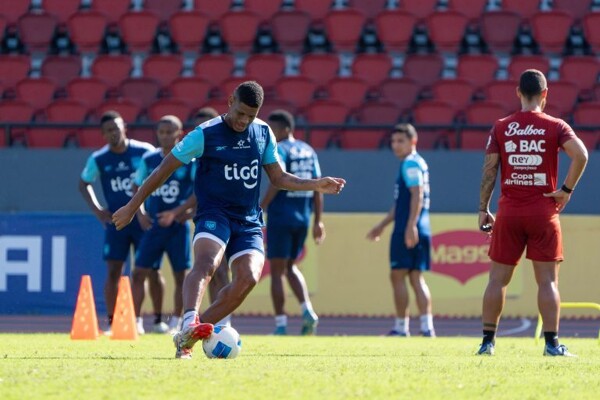
Panamanian Jorge Castelblanco and Colombian Raquel Palmenia Agudelo won the 49th edition of the Panama International Marathon on Sunday, bringing together thousands of runners and confirming the sustained growth of the country's main athletic event. Ecuadorean Julio Olivo, back in Panama after 18 years, also highlighted the visual impact and the demanding nature of the route. Carrasquilla, who secured Panama's qualification for the 2026 World Cup last Tuesday, said after finishing the race that it was "a very beautiful experience with a very positive energy, and I wanted to live this experience and I enjoyed it." "Yes, to do some shopping when I can, but also to get to know the city... this city, which is truly charming," Carvajal told EFE. The Panamanian, an Olympian in Rio 2016 and Tokyo 2020 and hailing from the Panamanian province of Chiriquí, thus secured his fourth victory in the Panama International Marathon. The event also featured the participation of Panamanian national team midfielder Adalberto Carrasquilla, who completed the 5-kilometer route. Tourism and sport: a formula for impact As in other major Latin American capitals, from Buenos Aires to Mexico City and São Paulo, the Panama marathon is also consolidating itself as a tourist driver. "More than anything, I was worried about the heat, but in the end, I can say it was a great course in a truly beautiful city," he stated. Massive support Beyond the winners, the Panama Marathon was a resounding success, according to the organizers. Administrator of the Tourism Authority, Gloria de León, has recognized the potential of these events and assured that they will remain attentive to upcoming major sporting events. "This year, 3,500 entries were sold." Among the runners attracted by the urban-tropical route close to the Pacific coast are Mexicans Eric Carvajal and Alejandra Vargas, who learned about the event through social media and traveled with the goal of qualifying times for the 2026 Boston Marathon, but also for tourism and some year-end shopping. The figure of over 3,000 registered runners marked a new milestone for the event. "I will have the honor of inviting the U.S. Ambassador to run," he announced, recalling the origins of the event in the 1970s U.S. military bases. The organizer emphasized that the magnitude of the event is already translating into economic benefits for the country, although the Ministry of Tourism will be in charge of accurately measuring its impact. Miró announced that the goal is to reach 5,000 slots by 2026, the year the race will celebrate its 50th edition. He explained that the competition brought together participants from all continents, with Colombia being the largest foreign delegation, with 300 runners. The arrival of international athletes boosts demand for hotels, gastronomy, and transportation, in addition to boosting local commerce. Castelblanco completed the course in 2:27:40, while Agudelo stopped the clock at 2:52:16, times that earned them the honors in the 42 kilometers and also secured a prize of $3,000 each. "We were oversubscribed," said Gregorio 'Beby' Miró, president of the Isthmus Runners Club and head of the organization. "I can only say that we are all doing well, because each person stays for at least four days and they don't travel alone," commented Miró. The traditional route dates back to the Transisthmian Relay Race, whose first edition was held in 1975, organized by the United States Marine Corps (U.S. Marine Barracks) as a competition between the Marines and the Army, then stationed in the former Canal Zone.

Panama Marathon Confirms Its Status as the Country's Main Sporting Event
Panamanian Jorge Castelblanco and Colombian Raquel Palmenia Agudelo won the 49th Panama International Marathon. The event brought together thousands of participants and solidified the country's reputation as a center for sports tourism, bringing economic benefits.